
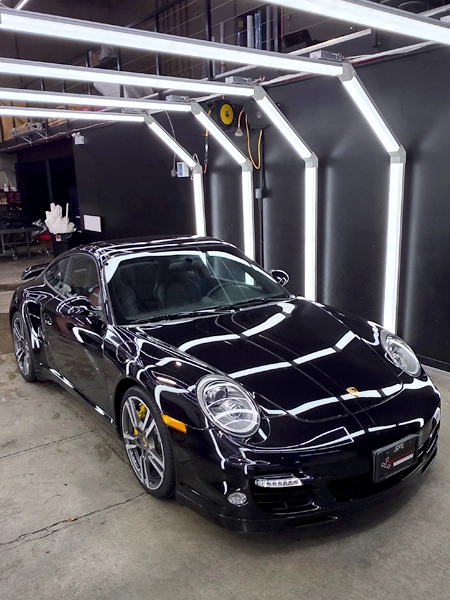
A fresh start for a Porsche that deserved better paint protection.
Not every paint protection film project begins with a brand-new vehicle. Sometimes, the challenge is removing an older installation, understanding what’s underneath, and giving the vehicle the finish and protection it should have had in the first place.
That was the case with this 2011 Porsche 911 Turbo S, whose owner travelled from Williams Lake, BC, to Speed Projects Laboratory (SPL) in Richmond for a complete paint protection refresh.
Our SPL2 Paint Protection team carried out three main services:
- Removal of the existing front-end paint protection film (PPF)
- Full-body paint correction
- Installation of XPEL ULTIMATE PLUS PPF on the full front end, followed by ceramic coating on the entire vehicle
But the story began well before the Porsche entered our workshop.
From Williams Lake to Richmond: Finding the Right PPF Installer
The owner purchased this Porsche pre-owned more than five years ago. At the time, the dealership arranged for paint protection film to be installed.
Although the original installation wasn’t quite what he had hoped for, he decided to leave the film in place. After all, having some protection against road debris seemed better than leaving the paint completely exposed.
Years later, he wanted to revisit that decision.
Rather than simply booking another PPF installation, he spent time researching his options and looking for a shop that would explain the process, potential complications, and expected results.
Because he regularly travels to Vancouver from Williams Lake, he arranged an in-person consultation at SPL approximately a month before his scheduled September 18 appointment.
During that visit, we discussed not only what a new PPF installation could achieve, but also something equally important: the risks and uncertainties involved in removing paint protection film installed by another shop.
We believe clients deserve to understand those risks before committing to the work.
What Should You Know Before Removing Old Paint Protection Film?
One of the most common questions we receive is whether old PPF can simply be peeled off and replaced.
In many cases, yes. However, the removal process is not always straightforward, especially when the original film’s brand, installation methods, and history are unknown.
Here are the key considerations we explained during this Porsche owner’s consultation.
1. Unknown Film Quality Can Affect Removal Time and Cost
When we remove film installed elsewhere, we often have no reliable way of knowing which product was used.
Premium-quality PPF, when properly installed and maintained, is generally designed to be removable using appropriate techniques. The film will ideally release in relatively large sections, leaving manageable adhesive residue behind.
However, some older or deteriorated films can become much more difficult to remove.
One particularly challenging issue is film layer separation, where the layers of the PPF separate during removal instead of lifting away together.
This can leave portions of the film or adhesive bonded to the paint, requiring substantially more time and careful removal work.
For reference, a relatively straightforward full-front PPF removal may take approximately 3–4 hours at SPL.
When significant film deterioration or layer separation occurs, the same project can take considerably longer — potentially extending over multiple days.
Because removal labour is charged hourly, this can affect the final cost.
The age of the film alone doesn’t tell the entire story. Product quality, environmental exposure, maintenance history, and installation methods can all influence how easily it comes off.
2. Old PPF Can Conceal Existing Paint Damage
Another concern is what might be hidden beneath the film.
Without knowing how the original PPF was installed, we cannot guarantee that the underlying paint is free from previous damage.
Potential findings include:
- Fine knife marks from film that was hand-trimmed directly on the vehicle
- Scratches or blemishes concealed beneath the film
- Previous paint repairs or refinishing
- Existing paint chips and other surface imperfections
These conditions may not become visible until the old film has been removed.
For this reason, we always explain that removing PPF can reveal pre-existing damage that was not apparent during the initial inspection.
3. Excessive Adhesive Promoter Can Complicate Removal
Adhesive promoter, often referred to as primer, is sometimes used during PPF installation to increase adhesion in difficult areas.
Certain installers use it around complex curves, tight edges, and high-tension sections to help keep the film secured.
While it can make some installation challenges easier to manage, excessive or unnecessary use can create complications when the film eventually needs to be removed.
At SPL, our PPF installation process does not rely on adhesive promoters or primers.
Instead, we focus on proper film positioning, tension management, panel preparation, and installation techniques that produce a clean, durable result without those additional bonding agents.
This approach also takes future serviceability into consideration.
4. Paint Lifting Is a Risk That Must Be Discussed
One of the most important considerations with PPF removal is the possibility of paint lifting.
Paint lifting occurs when the bond between the paint and the underlying panel or coating system is weaker than the adhesion between the film and the painted surface.
This risk can be higher when:
- A panel has been repainted improperly
- The existing paint has poor adhesion
- Excessive adhesive promoter was used
- The PPF or adhesive has significantly deteriorated
- Previous paint damage or repairs are present
Our technicians use controlled heat or steam, careful removal angles, and appropriate techniques to help soften the adhesive and minimize stress on the painted surface.
However, even with proper procedures, the risk cannot be eliminated entirely.
We’ve successfully removed PPF from many vehicles without paint damage, but we never promise a zero-risk removal — especially when the condition and history of the underlying paint are unknown.
Does that mean PPF isn’t worth installing?
Not at all.
Paint protection film is intended to help absorb the impacts and abrasion that would otherwise reach the vehicle’s paint during everyday driving.
Without PPF, rock chips, road debris, and other physical damage can leave permanent marks on painted panels.
Repairing those marks may require touch-ups or repainting, which can introduce additional concerns such as colour-matching differences, dust contamination, paint texture variations, or other refinishing imperfections.
Properly installed, high-quality PPF helps reduce that exposure while preserving more of the original finish.
The important distinction is that PPF protects the paint during vehicle use, while removal is a separate procedure with its own considerations.
Why We Provide Estimates Rather Than Guaranteed PPF Removal Prices
Unlike installing new film on a properly prepared surface, removing unknown PPF involves variables that cannot always be assessed beforehand.
We can inspect the visible condition, consider the film’s approximate age, and provide an estimated labour range based on our experience.
However, we won’t know exactly how the film will respond until removal begins.
That is why we explain our hourly removal pricing and the possibility of additional labour during the consultation.
Our goal isn’t simply to provide the lowest initial estimate. It’s to make sure the owner understands the process and can make an informed decision.
For this Porsche owner, having that conversation upfront was an important part of choosing SPL.
Step 1: Removing the Existing PPF
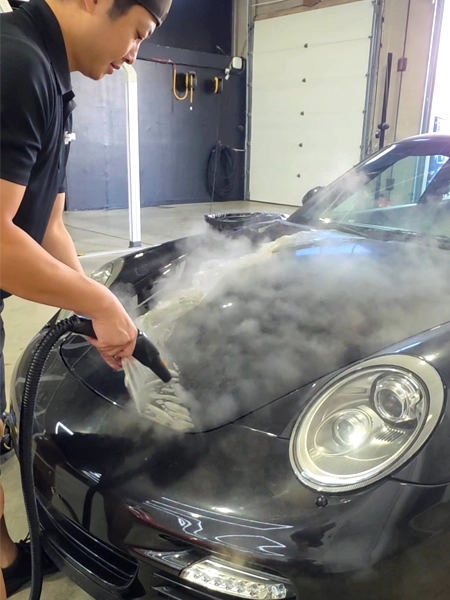
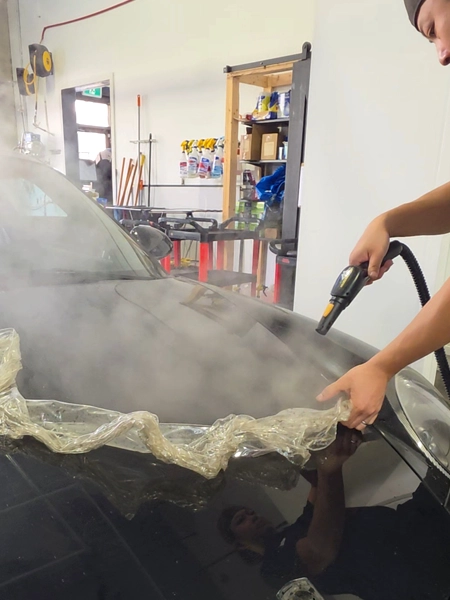
With the consultation completed and the project scheduled, our team began removing the Porsche’s existing front-end paint protection film.
The removal process requires patience, particularly around curved body panels, edges, and areas where adhesive may be more firmly bonded.
Rather than rushing to pull the film away, our technicians use appropriate heat and removal techniques to reduce unnecessary stress on the finish.
Once the old film is removed, the exposed surfaces can be inspected and prepared for the next stage.
Any remaining adhesive residue must be addressed before paint correction or new PPF installation can begin.
Proper surface preparation is essential. Installing fresh PPF over old adhesive, contamination, or unresolved paint imperfections would compromise the quality of the finished project.
Step 2: Full-Body Paint Correction
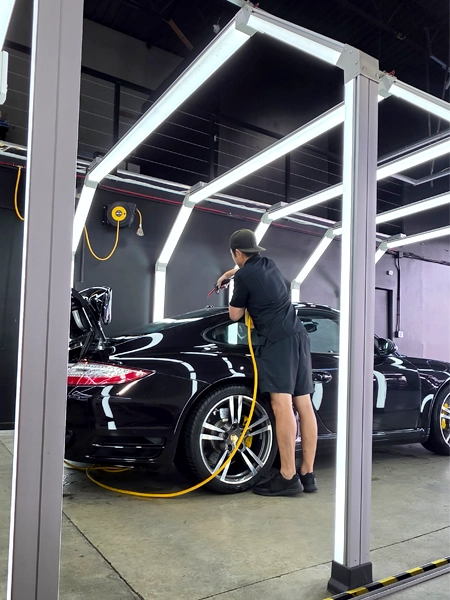

Removing the old PPF was only the beginning.
Because this Porsche had been driven and enjoyed for years, the owner also wanted to improve the overall appearance of its black paintwork.
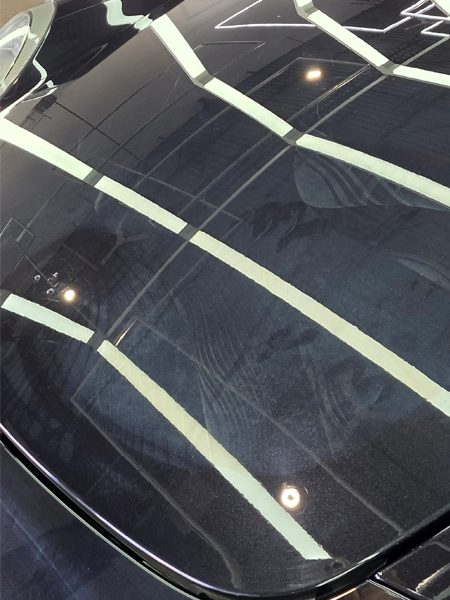
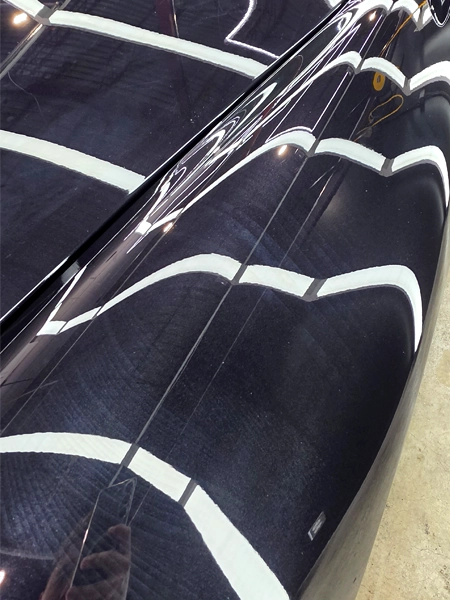
Black paint can be especially revealing under strong lighting. Fine swirl marks, wash-induced scratches, and surface haze can reduce the depth and clarity of the finish.
Our team performed full-body paint correction to improve the appearance of the paint before applying new protection.
Paint correction uses controlled machine polishing and appropriate polishing compounds to reduce suitable surface defects in the clear coat.
The objective isn’t to remove as much clear coat as possible. It’s to achieve a meaningful improvement in gloss and clarity while preserving the paint’s long-term integrity.
Under our inspection lighting, we can assess the finish throughout the correction process and identify areas requiring additional attention.
The result is a cleaner, deeper-looking black finish that provides a much better foundation for the new PPF and ceramic coating.
For owners considering a similar restoration, our ceramic coating and paint correction services explain how surface preparation and long-term finish care work together.
Step 3: Installing XPEL ULTIMATE PLUS Full-Front PPF
With the old film removed and the paint corrected, we installed XPEL ULTIMATE PLUS paint protection film across the Porsche’s full front end.
The front of a Porsche 911 is particularly exposed to road debris. Its low stance, wide front bumper, curved hood, and pronounced fenders make it important to protect the surfaces most likely to encounter impacts during highway driving.
XPEL ULTIMATE PLUS is a premium clear paint protection film designed to help protect painted surfaces from rock chips, abrasion, and everyday road hazards.
It also features a self-healing topcoat that can reduce the appearance of certain light surface marks when exposed to appropriate heat.
For this project, our focus was on achieving a much cleaner and more refined installation than the previous film.
That meant paying close attention to film alignment, tension, surface preparation, and finishing around the Porsche’s distinctive body contours.
At SPL, we wrap film edges where panel design and access allow, helping minimize visible film lines and create a more integrated appearance.
The finished installation provides a fresh layer of protection without taking away from the Porsche’s original design.
Learn more about our paint protection film packages in Richmond and Vancouver, including full-front and full-vehicle coverage options.
Step 4: Ceramic Coating the Entire Porsche
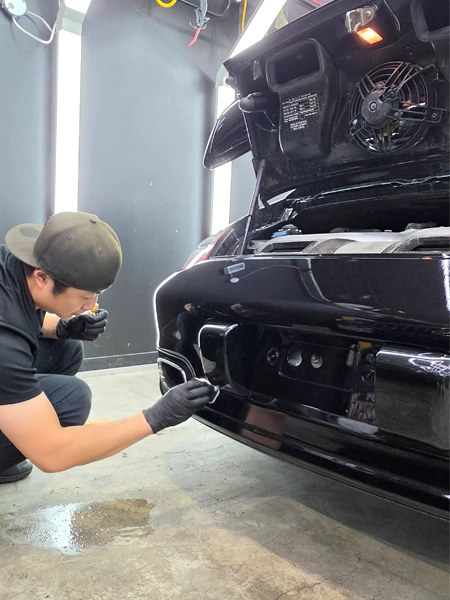
To complete the restoration, we applied ceramic coating across the vehicle.
While PPF and ceramic coating are often mentioned together, they serve different purposes.
PPF provides a physical protective layer designed to help absorb impacts from road debris.
Ceramic coating, on the other hand, helps enhance surface gloss, provides hydrophobic properties, and makes routine cleaning and maintenance easier.
For this Porsche, combining the two services offered a practical balance:
- Full-front PPF: Physical protection for high-impact areas
- Full-body paint correction: Improved clarity, depth, and appearance
- Ceramic coating: Enhanced gloss, water repellency, and easier ongoing maintenance
The ceramic coating complements the corrected paint and newly protected front end, helping the entire vehicle maintain a consistent appearance.
For a more detailed explanation of how these services differ, see our guide to PPF vs. ceramic coating in Vancouver.
The Finished Result: A Refreshed 2011 Porsche 911 Turbo S
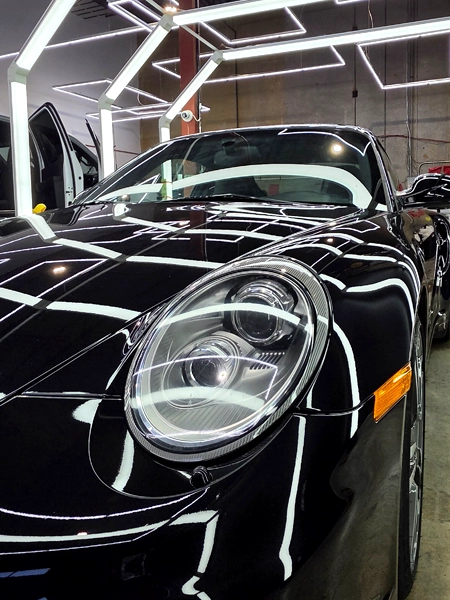
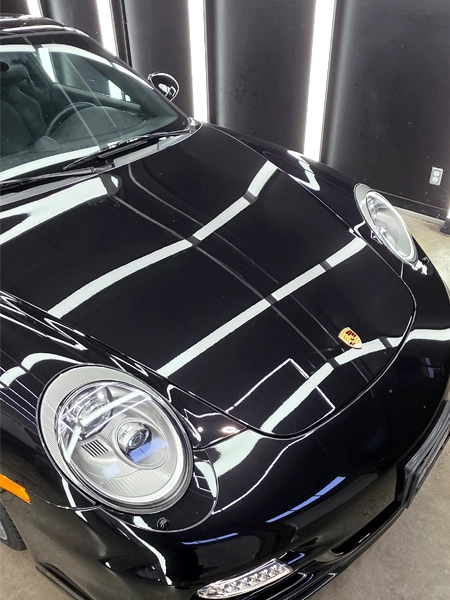
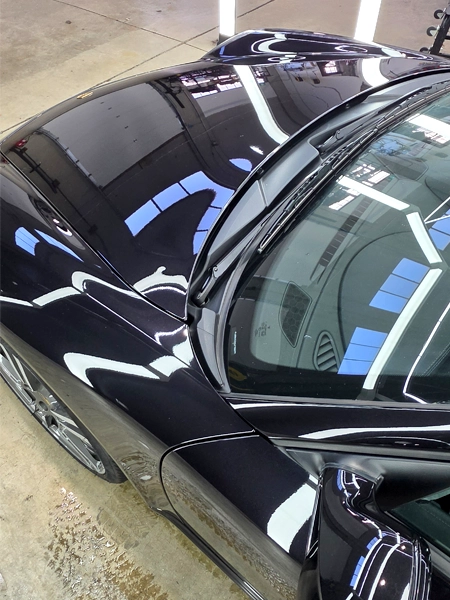


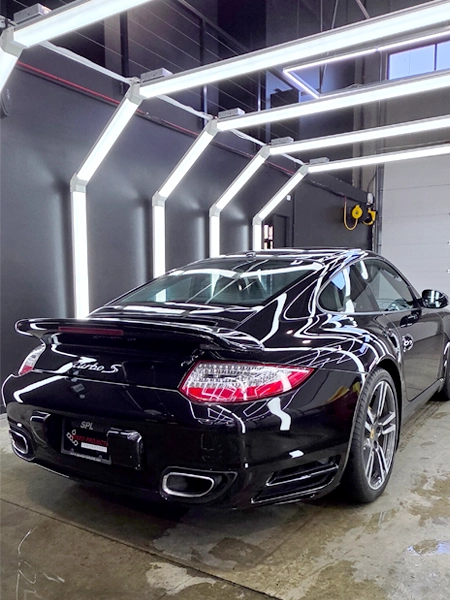
Seeing the Porsche after the work was completed was a reminder of how much of a difference proper preparation can make.
The black finish gained renewed depth and clarity, while the newly installed XPEL ULTIMATE PLUS PPF provided a cleaner appearance and renewed protection for the front end.
Rather than simply replacing one film with another, this project addressed the vehicle’s existing paint condition and brought the finish together as a complete restoration.
For a performance car like the 911 Turbo S, that combination of appearance and protection makes a meaningful difference.
A Second Booking Before the First Project Was Finished
One of the most rewarding parts of this project actually happened before we began working on the Porsche.
Following our initial consultation, the owner was pleased with the communication, honesty, and level of detail we provided.
In fact, before his Porsche’s scheduled service date, he had already arranged to bring us a second vehicle — a brand-new car he had recently purchased.
For our team, that kind of trust means a great deal.
We believe a successful client relationship starts long before installation day. It begins with listening, answering questions, discussing potential challenges, and making sure expectations are clear.
We’re grateful that this owner chose to travel from Williams Lake and trust SPL with his Porsche, and even more appreciative that he chose us again before the first project was completed.
Considering PPF Removal or Replacement in Vancouver?
If your vehicle has aging, damaged, lifting, or poorly installed paint protection film, replacing it may be worth considering.
However, the right approach starts with understanding the condition of the existing film and the paint beneath it.
At Speed Projects Laboratory in Richmond, BC, our SPL2 Paint Protection Division provides consultations for PPF removal, replacement, paint correction, and ceramic coating.
Whether you own a Porsche, BMW, Mercedes-Benz, Tesla, or another vehicle, we take the time to explain your options, potential risks, and expected results before proceeding.
Our approach is simple: do the work properly, communicate honestly, and help our clients make informed decisions about protecting their vehicles.
Speed Projects Laboratory — Perform. Protect. Maintain.
Located at #401–5940 No. 6 Road, Richmond, BC, serving Vancouver, the Lower Mainland, and vehicle owners travelling from across British Columbia.
Explore our paint protection services or learn more about SPL to arrange a consultation.
Frequently Asked Questions About PPF Removal
Can old paint protection film be removed without damaging the paint?
Yes. Many high-quality PPF installations can be removed successfully without paint damage when the underlying finish is sound and appropriate removal techniques are used. However, deteriorated film, excessive adhesive promoter, or poorly bonded paint can increase the risk. No installer can guarantee a completely risk-free removal.
How much does PPF removal cost in Vancouver?
The cost depends on the amount of film, its condition, adhesive behaviour, and how easily it releases from the vehicle. SPL typically charges for removal based on labour time. A straightforward full-front removal may take approximately 3–4 hours, while deteriorated film or layer separation can require substantially longer.
What happens if PPF separates during removal?
Layer separation occurs when portions of the film separate rather than releasing together. This may leave film layers or adhesive behind, requiring additional careful removal. It can significantly increase the time and cost of the project.
Can old PPF hide scratches or knife marks?
Yes. Paint protection film can conceal existing scratches, previous paint repairs, and marks from improper hand trimming. Some damage may only become visible after the film has been removed.
Should paint correction be performed before installing new PPF?
Paint correction is recommended when suitable surface defects are present and the owner wants to improve the finish. Since PPF is transparent, preparing the paint beforehand helps achieve a cleaner appearance. The extent of correction should be determined by the condition and thickness of the paint.
Can ceramic coating be applied over XPEL ULTIMATE PLUS PPF?
Yes, a compatible ceramic coating can be applied over XPEL ULTIMATE PLUS PPF. Ceramic coating can improve hydrophobic behaviour and make cleaning easier, while the PPF remains the primary layer protecting against physical impacts.
Is it worth replacing older PPF on a used Porsche?
It can be, especially if the existing film is deteriorating, lifting, discoloured, or poorly installed. An inspection and consultation can help determine whether removal and replacement are appropriate and what risks should be considered.