
Project Snapshot
Vehicle: 2015 Ford F-150
Customer Location: Yukon, Canada
Service: Removal and Replacement of 10-Year-Old Partial Hood Paint Protection Film
Replacement Film: XPEL ULTIMATE PLUS Paint Protection Film
Labour Time: Approximately 6 Hours
Turnaround: Same-Day Service
Climate Exposure: Yukon – One of Canada’s harshest environments for automotive paint and protective films
Key Takeaways
- This 2015 Ford F-150 still wore its original dealership-installed partial hood paint protection film after more than ten years.
- When replacing a partial hood, it might be a good idea to look into full vehicle paint protection film for broader coverage as well!
- Despite the film appearing dull, shrinking, and lifting at the edges, it had successfully protected the original paint underneath.
- Steam-assisted removal allowed the film to come off in one piece without layer separation, leaving only adhesive residue behind.
- After removing the adhesive, the protected paint retained noticeably better gloss and fewer micro-scratches than the adjacent exposed paint.
- The hood was prepared and reprotected with XPEL ULTIMATE PLUS Paint Protection Film during the same-day visit.
A Yukon Truck With Over a Decade of Paint Protection
Paint protection film (PPF) is designed to protect a vehicle’s paint from stone chips, road debris, UV exposure, bug acids, and everyday wear. Like any product exposed to the elements year after year, however, it eventually reaches the end of its service life.
This 2015 Ford F-150 is a perfect example.
The owner lives in the Yukon, where vehicles endure some of Canada’s most demanding weather conditions. Long winters, freezing temperatures, road salt, gravel highways, and strong UV exposure all contribute to the aging of protective films over time.
Before visiting Vancouver, the owner researched several paint protection film specialists and contacted multiple shops. After discussing the project, they entrusted Speed Projects Laboratory with removing the aging film and installing new protection before returning home.
Project Background
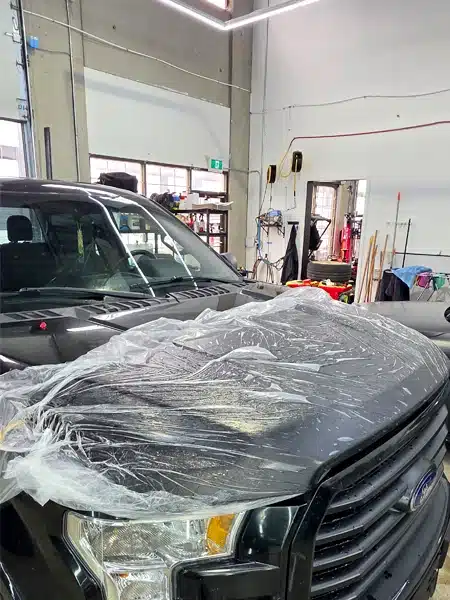
The original partial hood paint protection film had been installed by a Ford dealership when the truck was new.
After more than ten years of protecting the hood, the film had clearly reached the end of its lifespan.
Visible signs included:
- Loss of gloss
- Dull appearance
- Film shrinkage
- Lifting along body lines
- Dirt accumulation near the edges
To many vehicle owners, this appearance suggests the paint underneath has also deteriorated.
As this project would demonstrate, appearances can be deceiving.
Stage 1 – Vehicle Inspection
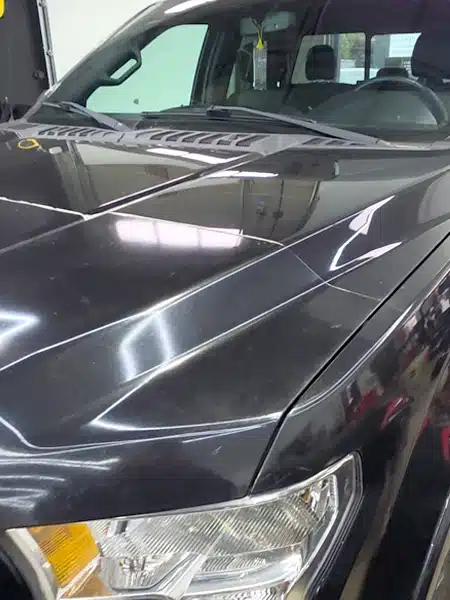
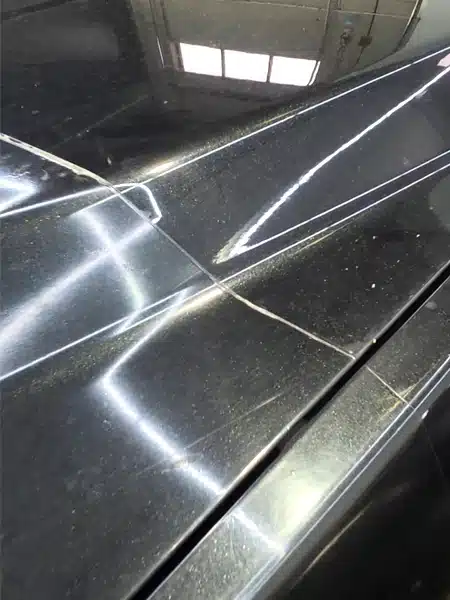
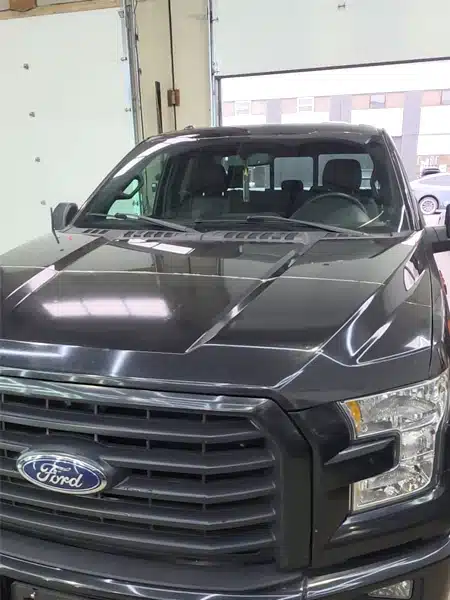
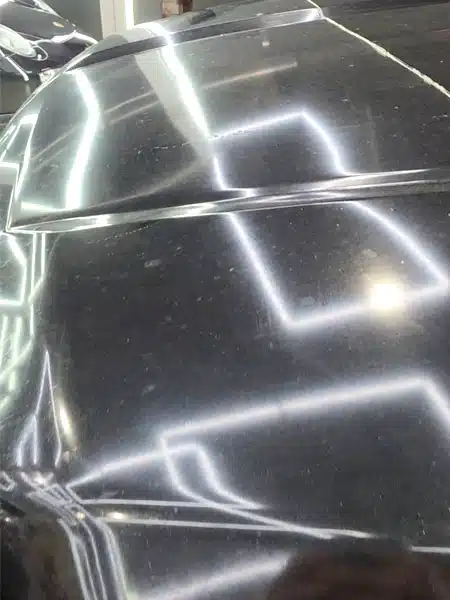
During the initial inspection, we evaluated both the condition of the film and the paint beneath the exposed areas.
Although the film had aged considerably, there were no signs of severe cracking or multiple-layer delamination.
This was encouraging.
While the film had yellowed and shrunk over time, it was still structurally intact—a strong indication that the original dealership-installed film had been a quality product.
Stage 2 – Removing Over 10 Years of Paint Protection Film
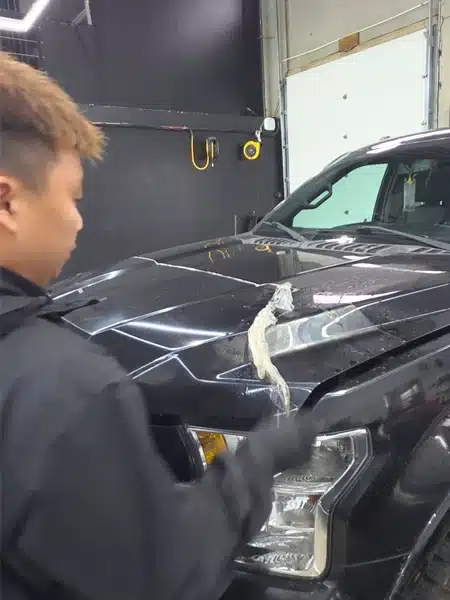
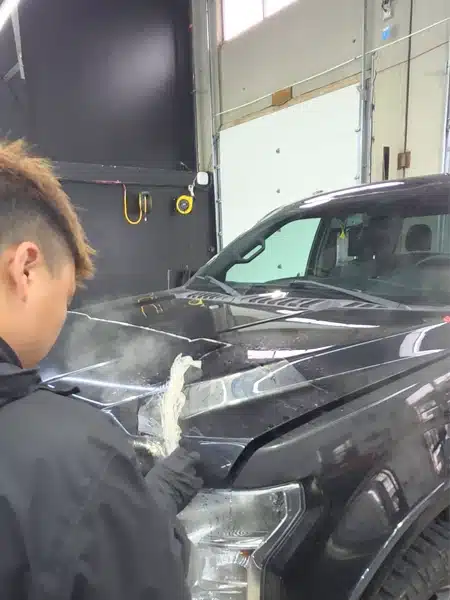
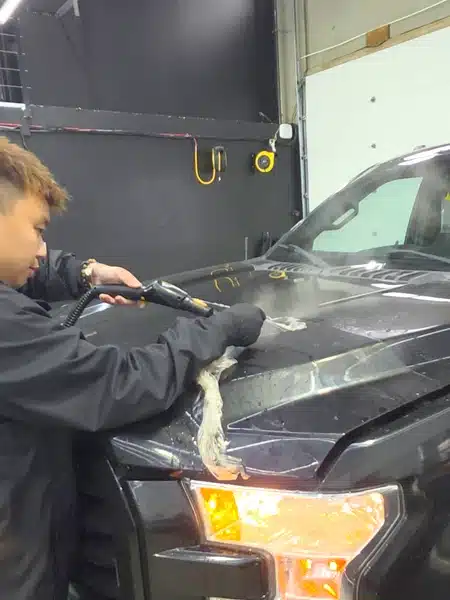
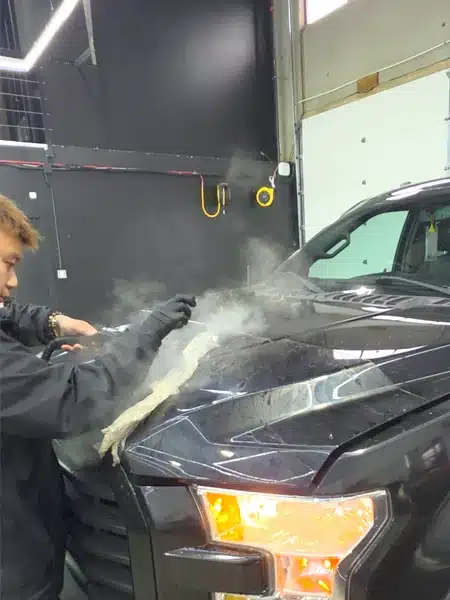
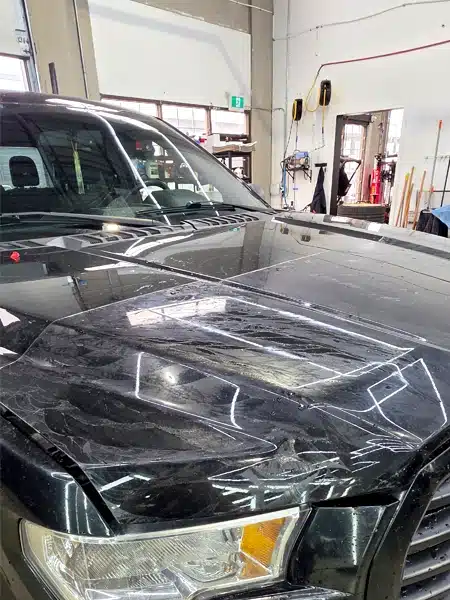
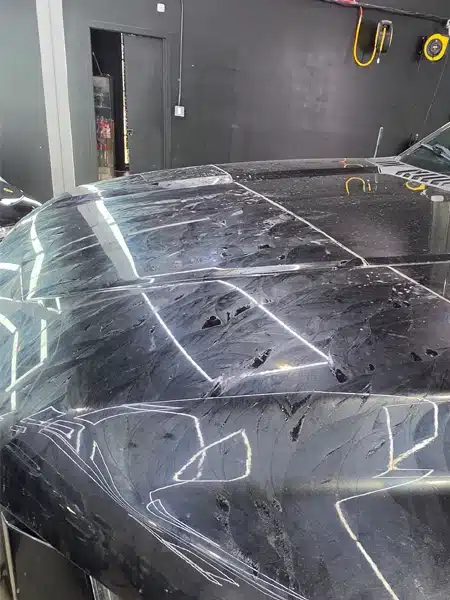
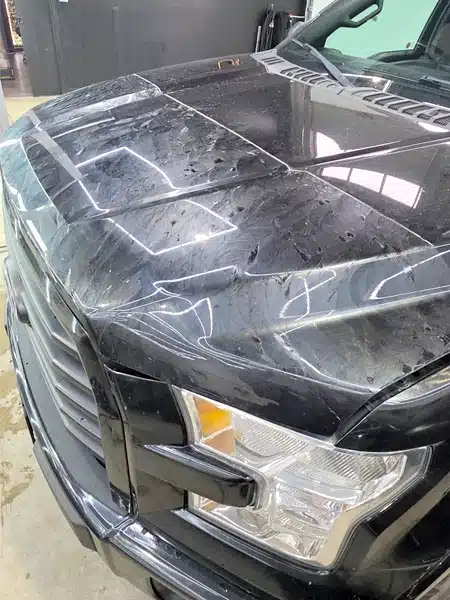
Removing old paint protection film requires patience and the correct techniques.
Rather than aggressively pulling the film, we used steam to soften the adhesive before gradually peeling the film away from the hood.
Although the film looked heavily aged, it separated cleanly in a single layer.
The only remaining challenge was the adhesive residue left on the paint.
Compared to films that crack into hundreds of brittle pieces or suffer layer separation, this represented one of the best possible removal scenarios.
SPL Technician’s Insight
One of the biggest misconceptions about aging paint protection film is that yellowing automatically means poor-quality film.
In reality, this project demonstrated the opposite.
Although the film had lost its gloss after more than ten years in the Yukon climate, it remained structurally stable during removal and peeled away without delaminating. That’s a testament to the quality of the original film and installation. The remaining adhesive residue was straightforward to remove compared to many severely deteriorated films we encounter.
Stage 3 – Adhesive Residue Removal
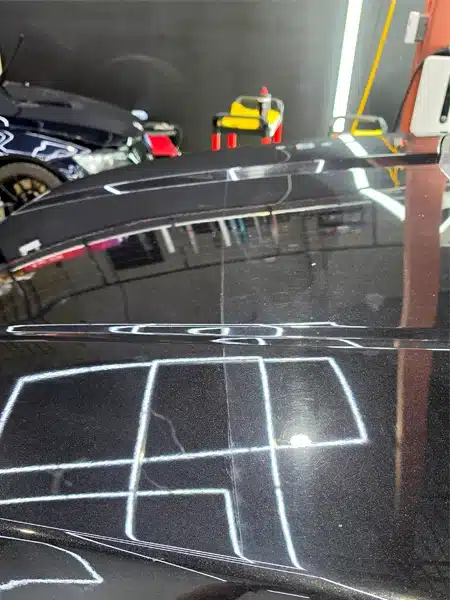
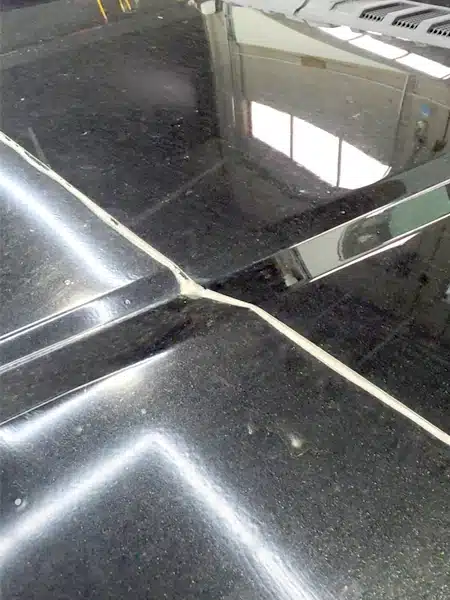
After removing the film, adhesive residue remained across the previously protected portion of the hood.
Using a dedicated adhesive remover, we carefully dissolved and cleaned the remaining residue without damaging the original paint.
One photograph from this stage perfectly illustrates the value of paint protection film.
The left side of the hood had been protected for over ten years before the adhesive was cleaned away.
The right side had remained exposed to the elements for the same period.
The difference was immediately noticeable.
The protected section retained a deeper black finish with significantly fewer micro-scratches, while the unprotected paint showed the typical light wash marks and wear expected after a decade of exposure. Vehicle owners comparing protection options can also review the differences between PPF versus ceramic coating.
This 50/50 comparison is perhaps the most compelling evidence of what quality paint protection film is designed to do.
SPL provides professional PPF removal and replacement for aging, damaged, poorly installed, or deteriorating paint protection film.
Stage 4 – Surface Preparation
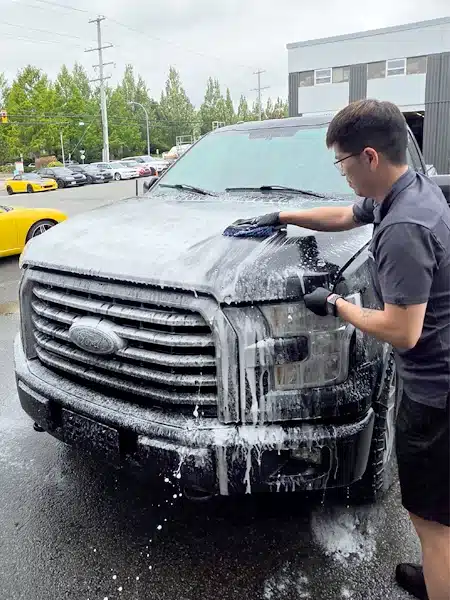
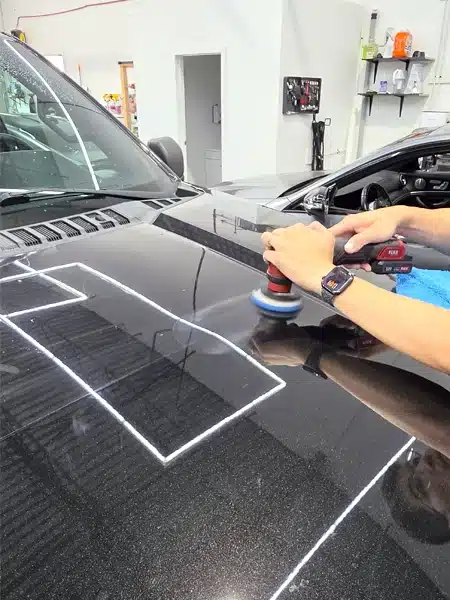
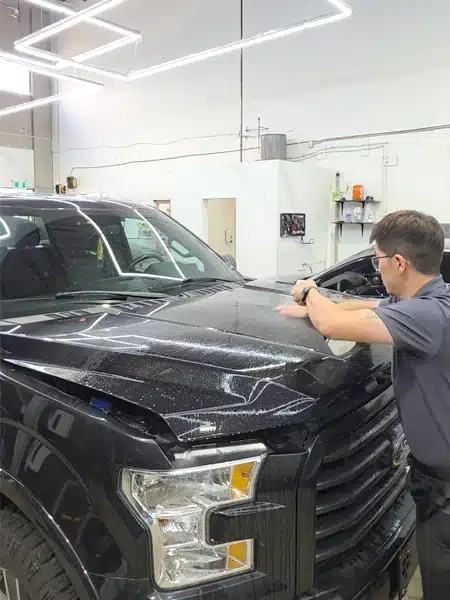
Before applying new film, proper surface preparation is essential.
Our preparation process included:
- Complete decontamination wash
- Clay bar treatment
- Light machine polishing
The polishing stage focused primarily on removing the visible adhesive line and refining the surrounding paint, creating an ideal surface for the new XPEL film.
Proper preparation helps ensure optimal film adhesion and a cleaner finished appearance.
Stage 5 – Installing New XPEL ULTIMATE PLUS
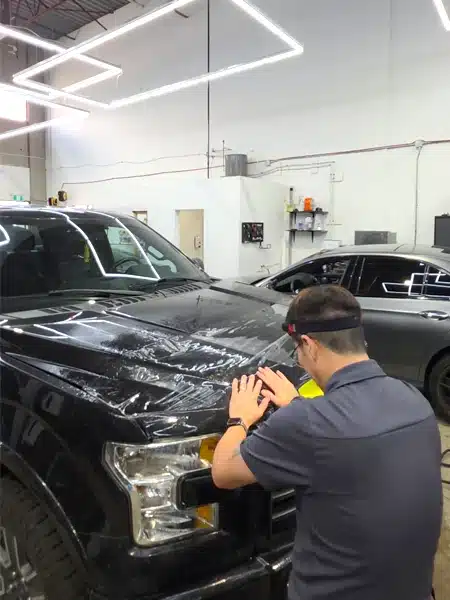
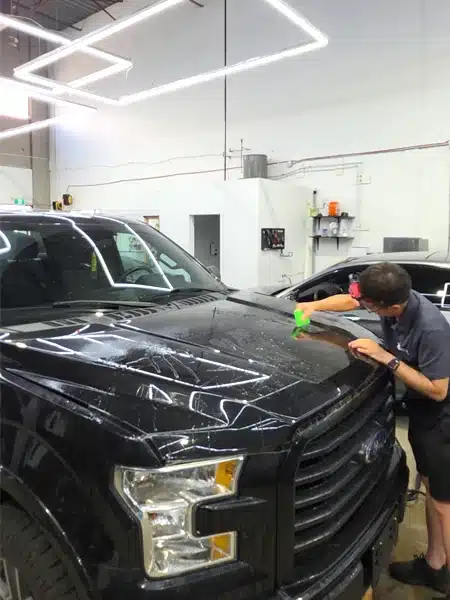
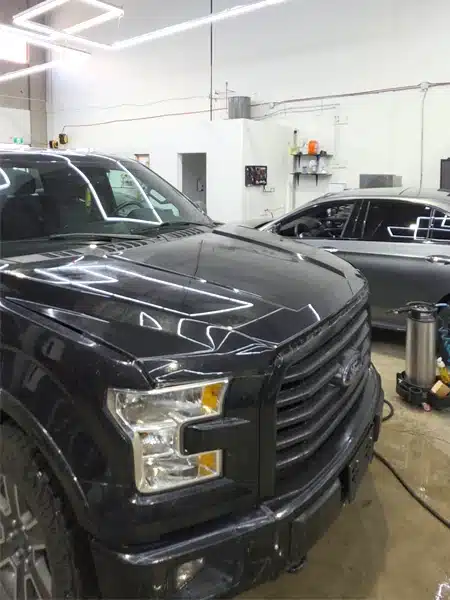
With the hood fully prepared, we installed a new partial hood section using XPEL ULTIMATE PLUS Paint Protection Film. Depending on the vehicle, driving conditions, and budget, customers can compare SPL’s available PPF coverage options
XPEL ULTIMATE PLUS offers:
- Excellent optical clarity
- Self-healing top coat
- Resistance against stone chips
- UV protection
- Outstanding gloss retention
- Long-term durability
Replacing the aging film restored both the appearance of the hood and its long-term protection.
Stage 6 – Installation Complete
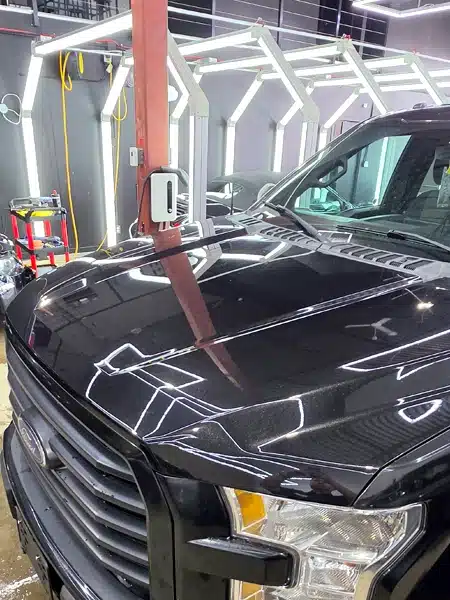
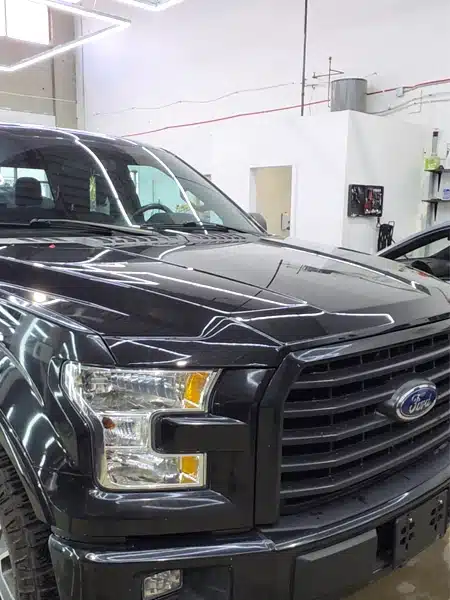
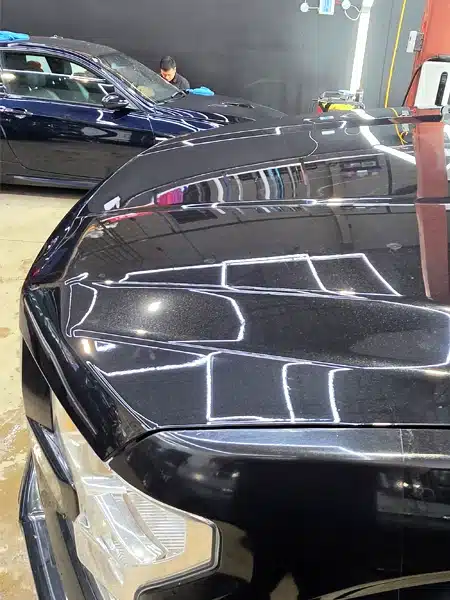
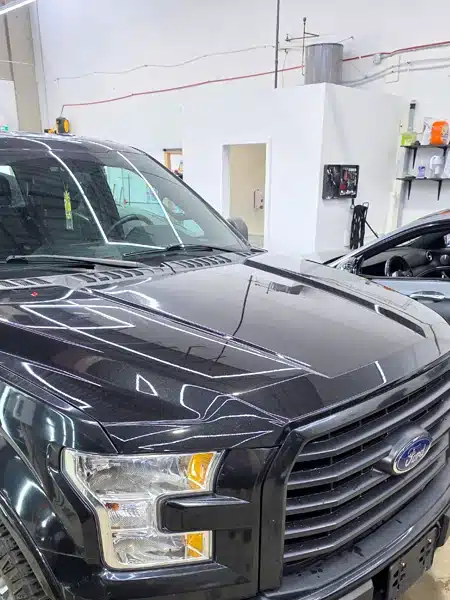
After installation, the transformation was immediately visible.
The dull, aged appearance had been replaced with a deep, glossy finish that complemented the rest of the truck.
More importantly, the hood was once again protected against the harsh road conditions the vehicle would continue to experience back home in the Yukon.
Stage 7 – Ready for Delivery
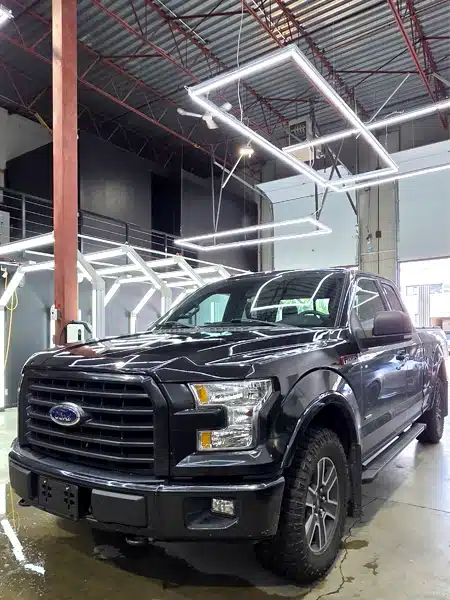
Approximately six hours after the truck arrived at our Richmond facility, the project was complete.
The customer was able to continue their visit to Vancouver before making the long journey back north with a freshly protected hood.
Completing the entire removal, preparation, and installation in a single day minimized downtime while ensuring the truck was ready for many more years of driving.
What This Project Teaches Us About Paint Protection Film
This project reinforces several important lessons about paint protection film:
- Quality PPF can provide excellent paint protection for well over a decade.
- Harsh climates accelerate the visible aging of the film.
- Aging film doesn’t necessarily mean the paint underneath has been damaged.
- Professional removal significantly reduces the risk of complications.
- Replacing aging film before complete failure generally results in a smoother removal process and better long-term results.
SPL Verdict
Would we recommend replacing 10-year-old paint protection film?
Yes.
This project demonstrated that the original dealership-installed film successfully protected the hood for more than ten years in the demanding Yukon climate.
Although the film itself had reached the end of its service life, the paint underneath remained in remarkably good condition.
By removing the aging film before severe deterioration occurred and replacing it with XPEL ULTIMATE PLUS, the owner preserved the original finish while restoring the truck’s appearance and long-term protection.
If your paint protection film has begun to yellow, lose gloss, shrink, crack, or lift around the edges, it’s worth having it professionally inspected before removal becomes significantly more difficult.
Common Questions About Aging Paint Protection Film
How long does paint protection film typically last?
Most premium paint protection films last many years, but their lifespan depends on the quality of the film, climate, maintenance, and how the vehicle is used. Vehicles exposed to harsh environments, such as the Yukon, may show signs of aging sooner than those in milder climates. Regular inspections can help determine the best time for replacement.
Does old paint protection film damage the paint?
Not necessarily. This project demonstrated that even though the film had become dull and shrunk over time, it had successfully protected the paint underneath for more than ten years. Every vehicle is different, but aging film doesn’t automatically mean the paint has been damaged.
Why did the film shrink and lose its gloss?
Paint protection film is constantly exposed to UV radiation, temperature changes, road debris, and environmental contaminants. Over many years, these factors can cause the film to lose gloss, shrink slightly, and lift around edges or body lines as it reaches the end of its service life.
Can 10-year-old paint protection film still be removed safely?
Yes, provided the film is removed using the proper techniques. In this project, steam was used to soften the adhesive, allowing the film to peel away cleanly without layer separation. Professional removal helps reduce the risk of damaging the paint or leaving excessive residue behind.
Why was there adhesive left behind after the film was removed?
As paint protection film ages, the adhesive can remain bonded to the paint even after the film itself is removed. This is common with older installations. A dedicated adhesive remover allows the residue to be dissolved and cleaned safely before preparing the surface for new film.
Why replace the old film with XPEL ULTIMATE PLUS?
XPEL ULTIMATE PLUS is known for its optical clarity, self-healing top coat, and durable protection against stone chips and environmental damage. Replacing the aging film with a modern premium product restores both the appearance and long-term protection of the vehicle. How much does paint protection film cost in Vancouver?
Do you offer paint protection film removal and replacement in Richmond and Vancouver?
Yes. Speed Projects Laboratory provides professional paint protection film removal, replacement, and new XPEL installations for customers throughout Richmond, Vancouver, the Lower Mainland, and even out-of-town clients travelling from other regions, such as this Yukon owner.
Why Choose Speed Projects Laboratory?
At Speed Projects Laboratory, we believe that protecting your vehicle isn’t just about installing film—it’s about preserving your investment for years to come.
Whether you’re replacing aging paint protection film in Vancouver, installing XPEL on a new vehicle, or looking for expert guidance on maintaining your vehicle’s finish, our team combines experience, premium materials, and meticulous workmanship to deliver results you can trust.
From local Richmond drivers to customers travelling from across Western Canada, we’re proud to help vehicle owners keep their vehicles looking their best, no matter where the road takes them.