
What Vancouver Drivers Need to Know for Tint Laws in BC
If you’re researching car window tinting in Vancouver, understanding British Columbia window tint laws is just as important as choosing the right film. Many drivers prioritize heat rejection or aesthetics first, only to run into compliance issues later.
At Speed Projects Laboratory, based in Richmond, BC, we work with drivers across Vancouver and the Lower Mainland who want high-performance car window tint without compromising legality, safety, or visibility. This guide explains how BC tint regulations work, how they’re enforced in real life, and how modern ceramic tint helps Vancouver drivers stay compliant while still improving comfort.
Are Car Window Tints Legal in British Columbia?
Yes, car window tinting is legal in British Columbia, but it is strictly regulated.
Unlike some provinces that rely heavily on percentage-based limits, BC window tint laws focus on driver visibility and road safety. Enforcement is based on whether the tint obstructs the driver’s clear view of the road rather than how dark the tint appears.
This distinction is especially important for car window tinting in Vancouver, where rain, overcast skies, and low-light driving conditions are common year-round.
British Columbia Window Tint Laws Overview
According to the British Columbia Motor Vehicle Act Regulations (Division 7 – Other Equipment, Section 7.05), window tint laws vary by window location.
Windshield Tint Laws in British Columbia
Only the top portion of the windshield may be tinted, up to 75 mm (3 inches / 7.5 cm) from the top edge.
Windshield Tint Rules
- Full windshield tint is not permitted
- Tint must not extend below the top 3 inches
- Tint must not interfere with the driver’s field of vision
Light, clear UV or heat-rejecting films that do not reduce visible light transmission are generally permitted and do not require medical exemptions.
Front Side Window Tint Laws in British Columbia
No tint is allowed on the front side windows (driver and front passenger windows).
Front Window Tint Rules
- Any film that reduces visible light transmission below 100% is considered illegal
- Clear UV-blocking films that do not darken the glass are permitted
This is one of the most common compliance issues for car window tint in Vancouver, especially when drivers copy tint setups from other provinces or online trends.
Rear Side and Rear Window Tint Laws in British Columbia
Windows behind the driver are allowed to be tinted to any level of darkness, including limo-dark tint.
Rear Window Tint Rules
- Rear side windows: any darkness allowed
- Rear windshield: any darkness allowed if both exterior side mirrors are installed
- Tint must not be reflective or mirrored
This flexibility allows Vancouver drivers to improve privacy and heat rejection while remaining compliant.
What Is the Darkest Legal Tint in British Columbia?
The darkest legal tint in BC is effectively 100%, but only on certain windows.
Legal Tint Limits by Window
- Front side windows: 0% tint allowed
- Windshield: tint allowed only on the top 3 inches
- Rear side windows: up to 100%
- Rear windshield: up to 100% with exterior mirrors
Understanding this breakdown is critical for anyone considering car window tinting in Vancouver.
Reflective and Mirrored Tint Laws in British Columbia
Reflective or mirrored window tint is not permitted in BC.
These films:
- Increase glare for other drivers
- Reduce visibility in rain and overcast conditions
- Attract unnecessary enforcement attention
For this reason, non-reflective ceramic window tint is the safest and most practical option for Vancouver drivers.
How Car Window Tint Laws Are Enforced in British Columbia
One of the most misunderstood aspects of car window tinting in Vancouver is enforcement.
BC enforcement is context-based, not purely visual.
How Enforcement Works in Practice
- Police may use a tint meter on front side windows
- Any reading below 100% on front windows is considered illegal
- Poor visibility in rain or at night increases scrutiny
- Vehicles that appear unsafe are more likely to be stopped
Choosing tint based purely on darkness often leads to issues.
Window Tint Penalties in British Columbia
Failing to comply with BC window tint laws can result in escalating penalties.
Initial Fine — $109
If an officer determines your tint is illegal:
- You will receive a $109 fine
- You will also receive a formal notice to remove the tint
Warning Period to Remove Tint
After the initial citation:
- You are given a short window to remove the illegal tint
- Proof of compliance may be required
Second Offence — $595 Fine
If the tint is not removed:
- A $595 fine may be issued
- Continued non-compliance may result in vehicle impoundment
How Ceramic Window Tint Helps Vancouver Drivers Stay Compliant
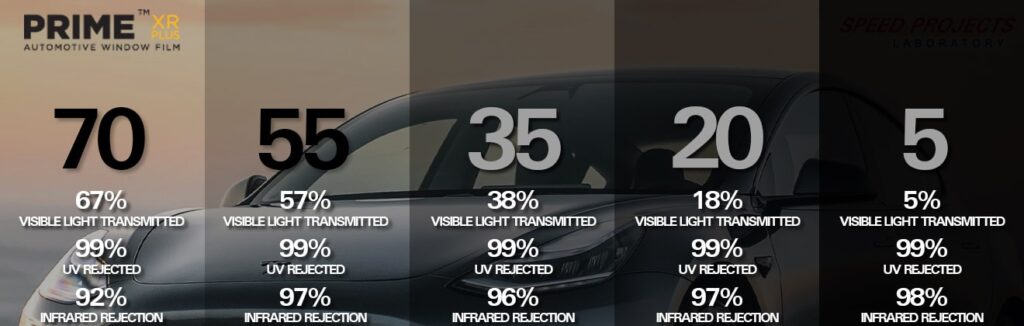
A common misconception is that a darker tint performs better.
The Reality
A darker tint does not equal better performance.
High-quality ceramic window tint can reject heat and UV rays effectively, even at clear or lighter shades, making it ideal for BC’s strict front-window regulations.
This performance-first approach is how we design tint setups at Speed Projects Laboratory, serving Vancouver from our Richmond, BC location.
Why Professional Installation Matters for Window Tinting in Vancouver
BC window tint laws leave very little margin for error, especially on front windows.
A professional installer understands:
- BC-specific tint regulations
- Vancouver lighting and weather conditions
- How to maximize performance without risking fines
Rather than pushing aggressive tint levels, we help drivers choose practical, long-term solutions that enhance daily driving while remaining compliant.
Want a Deeper Look at Window Tint Options?
BC window tint laws explain what’s legally allowed, but they don’t always explain what actually performs well in real Vancouver driving conditions.
Choosing the right window tint comes down to more than darkness. Film type, heat rejection, visibility in rain and low light, and long-term durability all play a role, especially for drivers in Vancouver and the Lower Mainland.
If you’d like a deeper breakdown of how different types of window tint options compare, how performance varies by film, and what’s worth prioritizing for long-term comfort, we cover it in our blog, The Ultimate Guide to Car Window Tinting.
That guide builds on the legal framework outlined here and connects it to real-world performance, helping Vancouver drivers choose a window tint setup that’s not only compliant but genuinely effective for everyday driving.
Why We Use XPEL Window Tint at Speed Projects Laboratory
At Speed Projects Laboratory, our approach to car window tinting in Vancouver is rooted in performance, clarity, and long-term reliability. That’s why we work with XPEL window tint for our installations.
XPEL is engineered with advanced ceramic technology designed to deliver high levels of heat and UV rejection without relying on dark or reflective films. This is especially important in British Columbia, where front window tint restrictions are strict, and visibility plays a central role in enforcement.
For Vancouver drivers, XPEL ceramic window tint allows us to:
- Improve interior comfort without compromising visibility
- Stay compliant with BC window tint laws on front windows
- Reduce glare in rain, overcast conditions, and low-light driving
- Maintain optical clarity and a clean, factory-like appearance
Rather than pushing aggressive tint levels, we focus on smart film selection, choosing lighter, high-performance ceramic options that actually perform better in real-world Vancouver driving conditions.
FAQ: Car Window Tinting Laws in British Columbia
Is car window tint legal in British Columbia?
Yes, but it is regulated. Front side windows may not be tinted, and windshield tint is limited to the top 3 inches.
Can rear windows be tinted in BC?
Yes. Rear side windows and the rear windshield may be tinted to any darkness if exterior side mirrors are installed.
Are reflective or mirrored tints allowed in BC?
No. Reflective and mirrored tints are not permitted.
Is clear UV film allowed on front windows?
Yes. Clear UV-blocking films that do not reduce visible light transmission are allowed.