
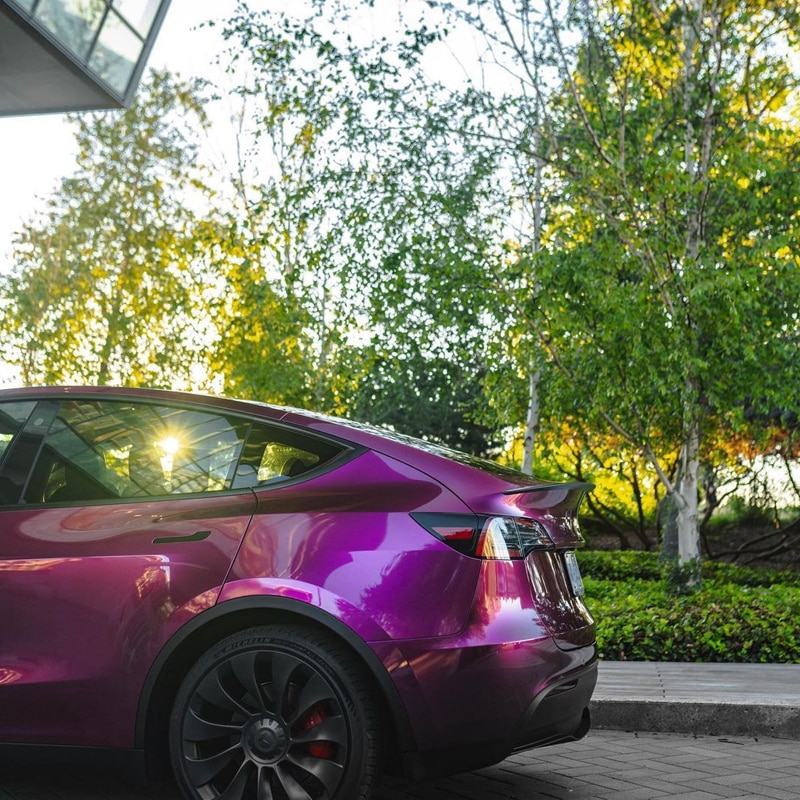
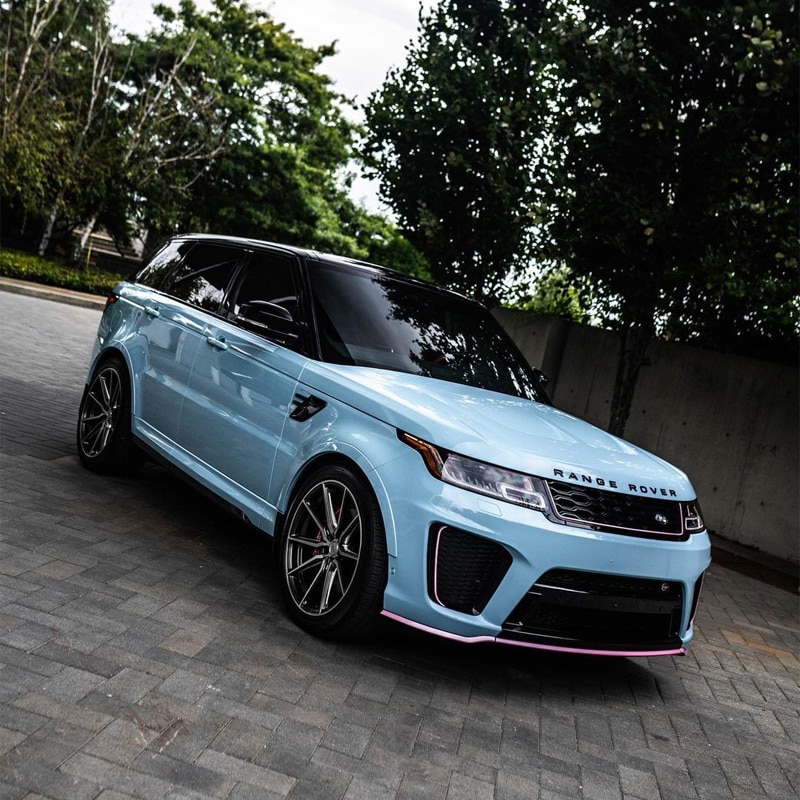
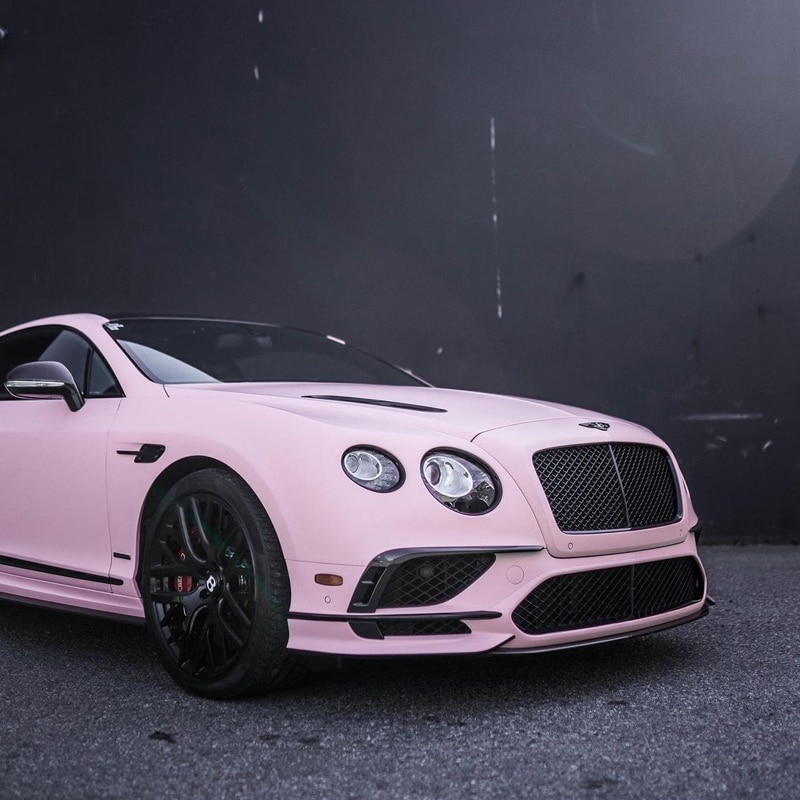
Coloured paint protection film (PPF) has become an increasingly popular option for car owners looking to transform their vehicle’s appearance while protecting the original paint underneath.
The concept is attractive. Rather than permanently repainting a vehicle, coloured PPF allows owners to choose a completely different colour or finish while gaining protection against everyday road hazards.
But is coloured PPF really worth it over the long term?
At Speed Projects Laboratory (SPL) in Richmond, BC, we’ve seen how automotive film technology has evolved from traditional colour-change vinyl to modern coloured PPF.
We’ve also encountered situations that rarely get discussed during the initial sales consultation: discontinued colours, mismatched replacement panels, unexpected insurance repair costs, difficult film removal, and the risks associated with extensive vehicle disassembly.
These considerations don’t make coloured PPF a bad product. For the right customer, it can be an excellent option.
However, we believe car owners should understand the complete ownership experience—not simply how impressive the vehicle looks when it leaves the installation shop.
In fact, if the colour you want is already available from the manufacturer, we would often recommend choosing that factory colour and protecting it with premium clear PPF instead.
Here’s what every car owner should consider before committing to a full-body colour-change installation.
From Colour-Change Vinyl to Coloured Paint Protection Film
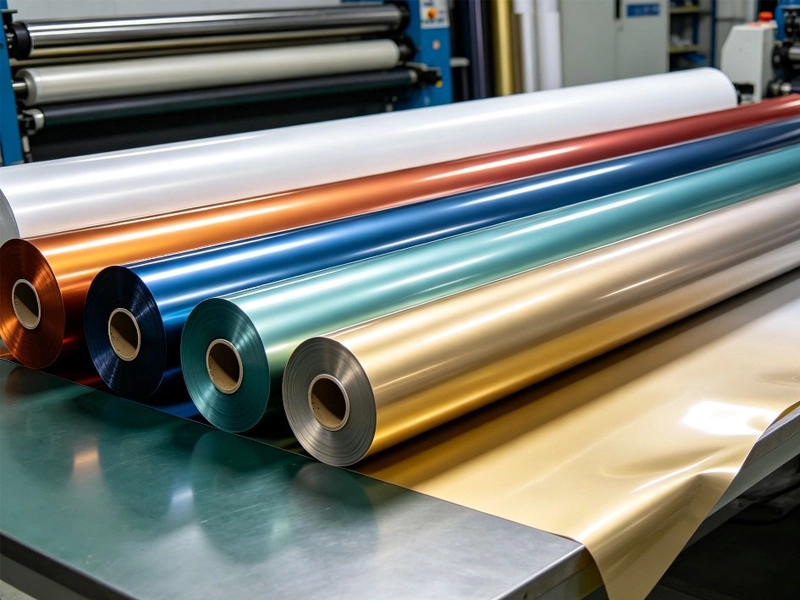
Before coloured PPF gained popularity, traditional automotive vinyl wraps were the primary option for changing a vehicle’s appearance without repainting it.
Vinyl introduced an enormous range of colours and finishes, from gloss and satin to matte, metallic, chrome, and colour-shifting effects.
It offered considerable creative freedom, but conventional colour-change vinyl was primarily designed for appearance rather than protection against significant stone impacts.
Coloured PPF was developed to combine the cosmetic appeal of vinyl with the protective characteristics of paint protection film.
Many coloured PPF products feature polyurethane-based construction, greater impact resistance than conventional vinyl, and self-healing topcoats that help fine scratches and swirls recover with heat.
These are genuine advantages.
However, adding colour to a protective film introduces additional challenges involving colour consistency, repairs, long-term material availability, and exposed original paint.
And those challenges become especially relevant when you plan to keep your vehicle for several years.
1. Not All Coloured PPF Offers the Same Protection
One of the main reasons customers consider coloured PPF instead of vinyl is the expectation of greater paint protection.
In many cases, that expectation is justified.
However, coloured PPF products vary significantly in thickness, construction, quality, and price.
Some competitively priced coloured films encountered in the market are approximately 5–6 mil thick, while premium clear PPF products commonly measure around 8 mil, with thicker options available.
For reference, one mil equals one-thousandth of an inch.
Premium coloured products are an important exception. XPEL COLOR PPF, for example, has a construction comparable in thickness to established 8 mil clear PPF products.
These premium coloured films can also come with substantially higher material costs, which may make them less attractive to price-sensitive customers.
Thickness alone does not determine impact protection. Material composition, topcoat performance, adhesive design, and actual manufacturer testing also matter.
It’s also important to compare specifications consistently, since manufacturers may distinguish between total film thickness and the thickness of individual layers.
Our advice: Don’t assume that every product labelled “coloured PPF” provides the same protection as a premium clear PPF.
Ask for the actual manufacturer, product series, thickness specifications, and warranty terms before comparing quotations.
2. Coloured PPF Lifespan: How Long Will It Really Look Good?
A new colour-change installation can look spectacular.
The more important question is how it will look after several years of driving, washing, and exposure to the environment.
Traditional colour-change vinyl is often treated as a shorter-term cosmetic modification. Some owners plan for replacement after approximately three to four years, particularly when the vehicle is frequently exposed to outdoor conditions.
For certain coloured PPF products, five to six years may be a reasonable replacement-planning horizon.
However, these figures are not universal manufacturer lifespans.
Higher-end products can provide considerably longer durability and warranty coverage. XPEL COLOR PPF, for example, carries a 10-year limited product warranty and is designed for long-term use when properly maintained.
Premium clear PPF products such as XPEL ULTIMATE PLUS and XPEL STEALTH also carry 10-year limited warranties.
The critical distinction is between a manufacturer’s warranty and the appearance an individual owner will find acceptable throughout that period.
Outdoor Parking and Environmental Exposure
Vehicles parked outdoors year-round experience constant exposure to sunlight, heat, moisture, road grime, and contaminants.
These conditions can influence film aging and appearance.
Horizontal panels such as the hood and roof often receive particularly high levels of environmental exposure.
A premium coloured film may maintain its appearance very well. However, gradual differences in colour or finish can become important when a damaged panel requires replacement years later.
A useful question to ask before choosing coloured PPF is:
If I plan to own this vehicle for eight to ten years, am I comfortable with the possibility of replacing the film before selling the car?
3. A 10-Year Warranty Doesn’t Mean Maintenance-Free Ownership
Manufacturer warranties are valuable, but they should always be read carefully.
For example, XPEL’s COLOR PPF limited warranty covers specified manufacturing defects, including yellowing, cracking, blistering, and delamination.
It does not guarantee that a brand-new replacement panel will have an identical visual appearance to film that has spent years exposed to the elements.
In fact, XPEL acknowledges that replacement coloured film may have a slightly different hue depending on the conditions experienced by the original installation.
Warranty coverage is also subject to product-specific terms and proper care.
What Does XPEL Recommend for COLOR PPF Maintenance?
XPEL’s published care instructions include:
- Waiting 72 hours after installation before washing.
- Avoiding automatic tunnel car washes.
- Hand washing out of direct sunlight once the vehicle has cooled.
- Washing approximately every two weeks or 600 miles (965 km).
- Drying with a suitable microfiber towel or electric blower.
- Removing insects, bird residue, and hard-water contamination promptly.
- Avoiding unapproved solvents, chemicals, and abrasives.
- Applying XPEL Ceramic Boost after each wash.
- Keeping pressure-washer nozzles at least three feet from the paintwork.
- Contacting an authorized dealer if damage occurs.
- Having the film inspected annually.
Maintenance requirements differ by product, so owners should always follow the instructions for the specific film installed.
For someone who enjoys maintaining their vehicle carefully, this may be a perfectly reasonable routine.
For an owner who relies on automatic car washes or prefers minimal maintenance, it’s a commitment worth understanding before installation.
A manufacturer’s warranty should be viewed alongside its exclusions and maintenance requirements—not as a promise that the vehicle will remain cosmetically identical for ten years without attention.
4. Coloured PPF Can Still Be Damaged by Rock Chips
Coloured PPF is generally more protective than conventional vinyl, but it is not indestructible.
Repeated impacts from stones, road debris, and harsh driving conditions can still puncture, tear, or wear through the film.
This creates a particular cosmetic concern when the colour of the film contrasts sharply with the original factory paint.
Imagine a white vehicle wrapped in satin black.
If road debris damages the black film deeply enough to expose the white paint underneath, those damaged areas become extremely noticeable.
A Real-World Example From SPL
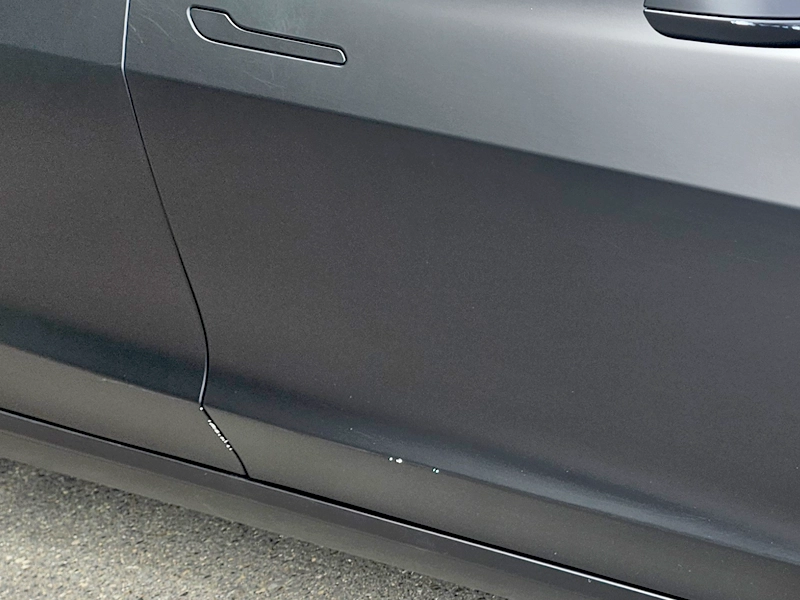
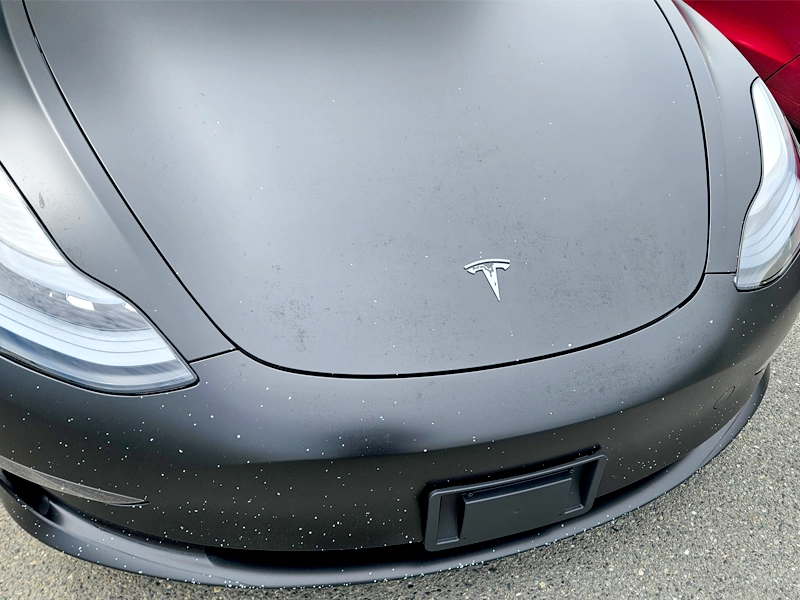
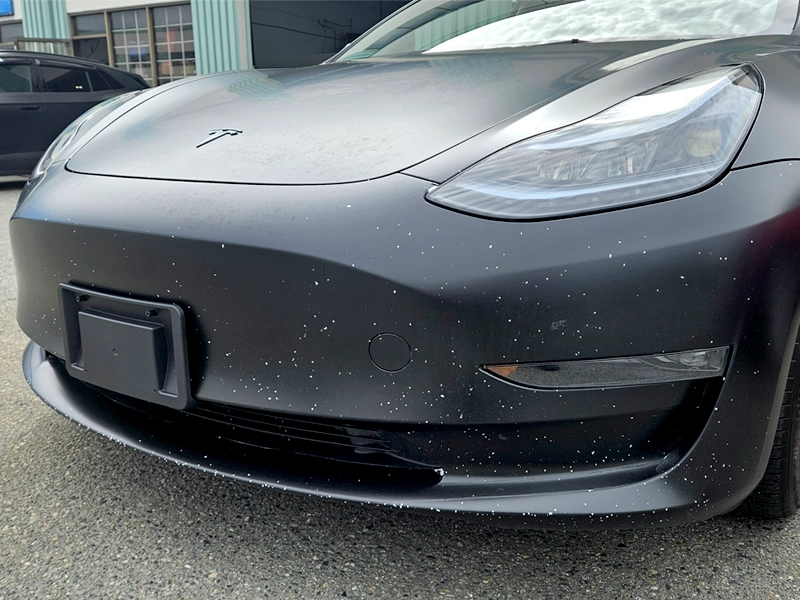
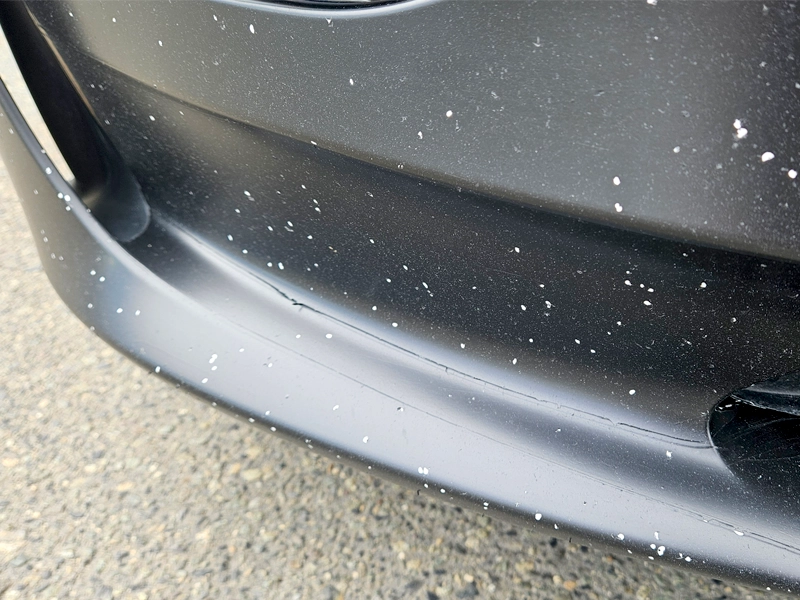
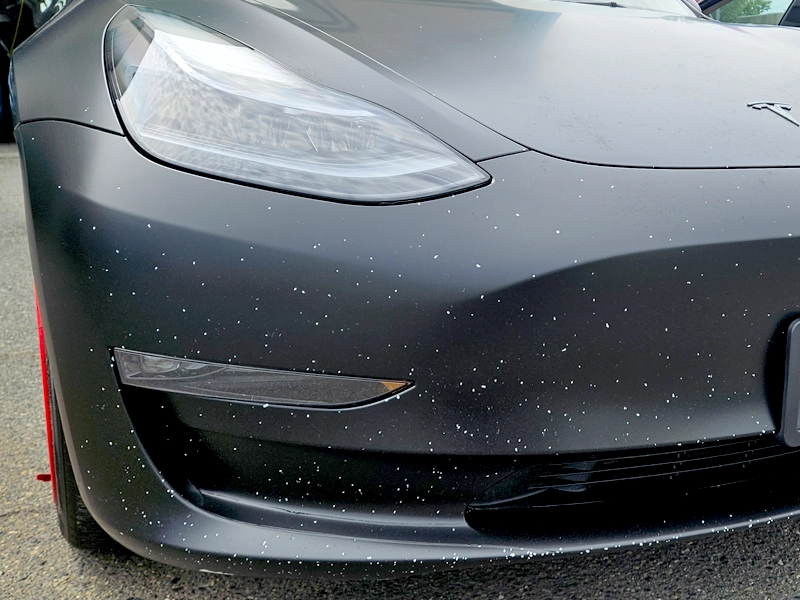
We encountered a white Tesla that had been previously wrapped in satin black colour-change film by another shop.
The vehicle exhibited extensive pitting and wear across high-impact areas, particularly around the front bumper and lower front surfaces.
The contrasting white marks significantly affected the appearance of the otherwise dark satin exterior.
The accompanying photographs show the condition of the vehicle when it came to our attention.
They demonstrate an important consideration: even when a wrap creates a dramatic appearance change, damage that exposes a contrasting original colour can make wear much more visually obvious.
With clear PPF, severe impacts can still damage the film and potentially the underlying paint. However, there is no additional opaque film colour that can wear away and reveal a contrasting base colour.
For someone who drives frequently on highways or keeps a vehicle for many years, this difference deserves consideration.
5. Replacing One Panel May Not Match the Rest of the Vehicle

One of the most overlooked problems with coloured PPF becomes apparent when a panel needs to be replaced.
Imagine a vehicle wrapped in a custom dark green.
After several years, the front bumper is damaged and requires new film.
You might expect the installer to order the same colour and restore the vehicle to its original appearance.
Unfortunately, it isn’t always that simple.
The existing film has spent years exposed to sunlight, weathering, washing, and environmental conditions.
The replacement film is brand new.
Even when both pieces share the same product code, the new film may differ slightly in colour depth, saturation, brightness, or surface sheen.
Why Paint Shops Can Blend Colour but PPF Installers Cannot
When a body shop repairs automotive paint, technicians can use colour matching and, when appropriate, blend paint into adjacent panels to create a gradual visual transition.
Coloured PPF does not offer the same flexibility.
Its colour and finish are manufactured into the film.
An installer cannot adjust the pigment or blend a new section into an older coloured panel in the same way an automotive painter can blend refinished paint.
If the replacement film is noticeably different, restoring a consistent appearance may require replacing additional panels.
That’s a potentially expensive complication when the original damage involved only one part of the vehicle.
6. What if Your Coloured PPF Is Discontinued?
Film manufacturers regularly introduce new colours, revise product ranges, and discontinue existing finishes.
A colour available today may no longer be available several years from now.
Even if the colour name remains unchanged, differences in raw materials, pigments, production methods, or manufacturing batches can influence the finished appearance.
With some lower-quality products, inconsistent production controls may create visible differences between batches or, in particularly poor cases, within the same roll.
That creates a significant concern when an accident requires replacement material.
SPL’s Experience: An Accident, a Discontinued Colour, and an Unexpected Bill
At Speed Projects Laboratory, we’ve encountered this situation multiple times.
A customer’s vehicle was protected with a full-body colour-change wrap.
Following an accident, approximately one-third of the vehicle required repair and repainting.
However, the colour of film originally installed was no longer available.
In the cases we encountered, the insurance company authorized replacement relating to the damaged portion of the vehicle but did not agree to cover rewrapping the undamaged two-thirds simply to restore a uniform colour.
That left the customer facing two difficult choices:
- Accept a mismatched appearance. Find the closest available colour for the repaired panels, knowing it may not match the remaining original wrap.
- Pay to rewrap the rest of the vehicle. Remove the existing film from the undamaged areas and invest in a complete colour-change installation using a newly available colour.
Neither option was what the customer expected when they originally purchased the wrap.
And in some cases, the accident wasn’t even their fault.
The customer still faced a substantial potential out-of-pocket expense simply to restore the appearance their vehicle had before the collision.
Insurance coverage depends on the policy, claim circumstances, and insurer’s assessment. Not every claim will be handled identically.
Nevertheless, these experiences illustrate why the future availability of coloured film can become a serious financial consideration.
An Important Note for BC Vehicle Owners
ICBC recognizes qualifying vehicle wraps as additional equipment under applicable Own Damage coverage, subject to policy terms and conditions.
However, insurance coverage for a damaged wrap should not be assumed to include replacing undamaged sections solely because the original film colour is discontinued or difficult to match.
ICBC also advises drivers to speak with their Autoplan broker when modifying a vehicle, including changing its colour.
Before investing in a colour-change wrap, we recommend asking your insurer how the wrap would be handled following a collision.
7. Why Buying Spare Coloured Film Isn’t Always the Solution
A reasonable question customers might ask is:
“What if I purchase extra film now and keep it for future repairs?”
It sounds like a practical way to protect against discontinued colours or future batch differences.
Unfortunately, storing spare film creates another challenge.
Uninstalled Film Has a Shelf Life
Automotive film has a recommended storage life before installation.
For example, Avery Dennison specifies a one-year shelf life for its PPF when stored under appropriate conditions. Other manufacturers also publish storage periods around 12 months for certain film products.
These storage-life figures differ by manufacturer and product.
They should not be confused with the film’s expected durability after proper installation on a vehicle.
Once material is kept beyond its recommended shelf life—or stored improperly—its characteristics may become less predictable.
Potential storage-related issues can include:
- Film tunnelling: Separation or channel-like distortions developing between layers of a stored roll.
- Surface or finish distortion: Pressure, heat, or prolonged storage affecting the film’s appearance.
- Adhesive changes: Aging or unsuitable storage conditions affecting adhesive behaviour and installation performance.
- Handling difficulties: Material becoming less predictable during stretching, positioning, or application.
These problems are not inevitable after exactly one year, but they explain why storage guidelines matter.
Buying a spare roll today does not guarantee that it will still install properly—or look identical to the existing film—three or five years from now.
If an owner is considering keeping extra material, they should first confirm the exact manufacturer’s shelf-life requirements, production date, recommended storage conditions, and whether the film will remain suitable for future use.
In short, spare film may help with a near-term repair, but it is not a guaranteed long-term solution to discontinued colours.
8. The Original Paint Colour Matters More Than You Think
When planning a full colour-change wrap, owners understandably focus on the colour they want.
But the original factory colour is equally important.
Consider a white vehicle being wrapped in satin black.
With the doors closed, the exterior may look excellent.
However, the original white paint can remain visible around door jambs, hinges, hood and trunk openings, deep recesses, panel gaps, and areas behind components that cannot easily be wrapped.
Some of these surfaces can be covered with additional labour.
Others may be impractical or inaccessible without extensive disassembly.
For owners expecting the car to look as though it left the factory in its new colour, contrasting original paint can be disappointing.
Why Darker Factory Colours Can Be a Better Starting Point
When a customer is committed to a darker colour-change wrap, we generally prefer starting with a dark factory paint colour where possible.
Black or dark grey paint is often less noticeable around exposed edges and recessed areas than white or another light colour.
For example, a black car wrapped in dark green will typically conceal small exposed areas more effectively than a white car wrapped in the same dark green.
It doesn’t eliminate the need for thoughtful coverage planning, but it can produce a more visually cohesive result.
9. Colour-Change PPF Often Involves More Vehicle Disassembly
To create a seamless colour-change appearance, installers may recommend removing exterior components such as door handles, mirrors, trim, badges, lighting assemblies, or bumper fittings.
This allows the film to extend farther into otherwise inaccessible areas and helps conceal the original paint.
However, disassembly is not something customers should overlook.
Modern vehicles contain numerous clips, seals, mouldings, fasteners, and precision-fitted parts.
Certain fasteners are designed for one-time use and should be replaced when removed.
Reusing damaged or unsuitable clips can create problems such as rattling, loose trim, insecure components, or poor fitment.
Even when the installer works carefully, certain components may not return to precisely the same fit or appearance they had before removal.
Proper procedures and replacement parts can reduce these risks, but they should still be discussed.
Clear PPF Gives Owners More Installation Flexibility
Clear PPF installations can also involve disassembly.
At SPL, we may recommend removing selected components if doing so will improve film coverage or the finished installation.
However, we consult with the vehicle owner first.
Customers who prefer not to have components removed can choose an installation approach that minimizes or avoids disassembly, provided the coverage expectations are understood.
This can mean accepting a visible film edge or reduced coverage around certain components.
Because clear PPF preserves the factory paint colour, those compromises are generally much less noticeable than exposed original paint beneath a contrasting colour-change wrap.
For owners who prioritize retaining their vehicle’s original factory assembly, this flexibility can be a meaningful advantage.
10. Accident Repairs May Leave Your Vehicle Looking Mismatched for Weeks
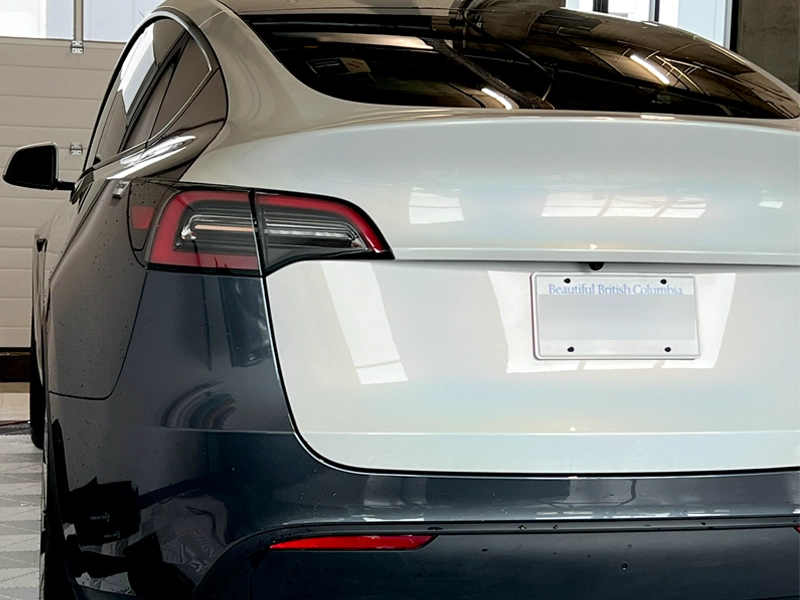
Another ownership consideration is the time required to restore coloured PPF after collision repairs.
Imagine a white vehicle wrapped in satin grey.
After an accident, the rear bumper is repaired and refinished in its original factory white paint.
Before new PPF can be installed, the paint must complete the curing and solvent-outgassing period recommended by the body shop and paint manufacturer.
A commonly used waiting period is approximately three to four weeks or around 30 days, although the required period varies by paint system and repair procedure.
During that time, the repaired bumper may remain white while the rest of the car is satin grey.
The owner may then face additional delays while the correct coloured film is ordered, delivered, and scheduled for installation.
Specialty colours are not always stocked, and discontinued products can complicate the process even further.
With clear PPF, the fresh paint must still cure before protection is reapplied.
However, the repaired panel is already refinished to the vehicle’s intended factory colour, subject to normal paint-matching tolerances.
The owner doesn’t have to drive a colour-changed car with an obviously different original-colour panel while waiting for the film.
11. Lower-Quality Film Can Become a Problem During Removal
Much of the discussion around coloured PPF focuses on how the product looks when installed.
But what happens when it needs to come off?
Properly manufactured PPF is designed to provide long-term protection while allowing professional removal from suitable painted surfaces.
However, removal characteristics can vary significantly depending on film construction, adhesive formulation, age, environmental exposure, and the condition of the underlying paint.
With certain lower-quality or deteriorated films, removal may involve:
- Excessive adhesive residue remaining on the vehicle.
- Film layers separating instead of lifting together.
- Brittle material tearing into small pieces.
- Additional labour to remove adhesive safely.
- Greater uncertainty when working over previously repaired paint.
These problems are not exclusive to coloured PPF, and even premium products can develop removal difficulties under certain conditions.
However, the quality of the material becomes particularly important when the entire vehicle is covered and future removal may be necessary.
Our Porsche 911 Turbo S PPF removal and restoration project provides another example of why understanding an existing film’s condition and removal risks is important before beginning restoration work.
An inexpensive installation may not remain inexpensive if removal several years later requires extensive adhesive cleanup and additional labour.
Before selecting a film, ask not only how it will look and perform, but also what the eventual removal process is expected to involve.
12. A Premium Film Is Only as Good as the Installation
So far, we’ve focused primarily on the film itself.
But even a premium product can produce disappointing results when installation techniques or workmanship fall short.
A full-body colour-change installation requires careful preparation, positioning, controlled stretching, edge finishing, and quality inspection.
Potential concerns include:
- Film bunching or excessive tension around complex curves.
- Edges lifting or failing to remain properly adhered.
- Noticeable exposed original paint.
- Poorly finished corners or trim transitions.
- Unnecessary damage during disassembly.
- Inconsistent coverage or finishing quality.
Not every visible seam or exposed edge indicates defective workmanship. Certain vehicle designs and agreed coverage limits require compromises.
What matters is whether the installer explains those limitations and delivers the installation standard promised to the customer.
Should an Extremely Low Price Be a Warning Sign?
The automotive film market is highly competitive, and customers may receive quotations with substantial price differences.
A lower price doesn’t automatically mean poor quality.
However, an unusually low quote deserves additional questions.
Differences may involve material cost, preparation time, installer experience, coverage, installation methods, warranty support, or business overhead.
Saving money on the initial installation is less attractive if it means accepting an unsuitable film or a finished result that requires correction.
Know What Film You’re Actually Purchasing
We recently received an inquiry from a car owner who had completed a colour-change installation at another shop.
The customer was concerned about exposed original paint, bunching, and areas where the film appeared to be lifting.
They also wanted to know whether there was a way to confirm that the material installed was actually the product named during the consultation and on the invoice.
Without inspecting the vehicle and reviewing the installation records, we cannot determine whether the workmanship was deficient or whether the film supplied differed from what was promised.
However, the questions themselves are reasonable.
When choosing an installer, ask for the exact manufacturer and film series, warranty documentation, installation coverage details, and any available product or installation identification records.
Appearance alone may not reliably identify a specific film brand or model.
The best value isn’t necessarily the lowest quote. It’s an installation where the customer understands the product, the process, the finished result, and the support available afterward.
So, Is Coloured PPF Worth It?
After reviewing these considerations, it may sound as though we’re against coloured PPF.
We’re not.
Coloured PPF is an exciting product, and there are situations where it makes excellent sense.
If the colour you want simply isn’t available from the manufacturer, a premium coloured PPF can provide a unique appearance with greater protective capability than conventional cosmetic vinyl.
It may also suit enthusiasts who enjoy changing their vehicles’ appearance periodically and are comfortable with the maintenance, repair, and replacement considerations involved.
But we believe the decision should begin with one important question:
Do you want to change your vehicle’s colour, or do you simply want to change how its existing colour looks?
Those two goals can lead to very different solutions.
If Your Desired Colour Is Available From the Factory, Choose It First
Imagine you’re purchasing a new vehicle.
The manufacturer offers the exact dark grey colour you’ve always wanted, but white is available at no additional charge.
You decide to purchase the white vehicle and then spend thousands of dollars installing coloured PPF to make it dark grey.
Although that provides the desired appearance and a protective layer, it also creates unnecessary complexity.
You now have to consider contrasting white door jambs, additional disassembly, coloured-film maintenance, future matching difficulties, and the possibility of an expensive rewrap following an accident.
All of these considerations arise from changing a vehicle into a colour the manufacturer already offers.
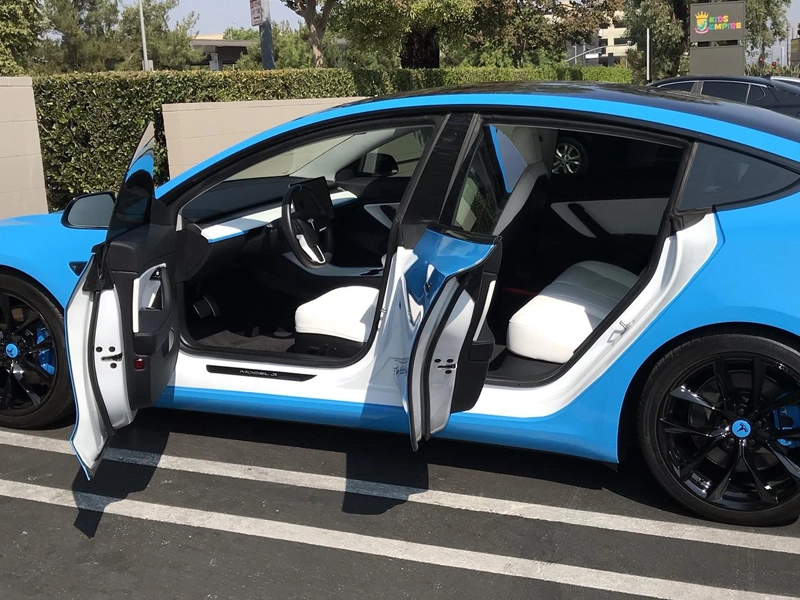
Our recommendation would generally be to choose the factory colour you actually want, then protect it with high-quality clear PPF.
Even when the manufacturer charges extra for the preferred paint colour, it’s worth comparing that cost with a complete colour-change installation.
The original paint already extends into many areas that are difficult or impossible to cover with film.
If the vehicle is damaged in an accident, body shops can use the factory paint code and conventional colour-matching techniques when refinishing panels.
You also avoid relying on an entirely separate opaque film colour to define the vehicle’s appearance.
For owners planning to keep their vehicles long-term, that often makes much more practical sense.
Want a Satin or Matte Appearance? You May Not Need Coloured PPF
Many owners consider coloured PPF because they love the look of satin grey, matte black, or other low-gloss finishes.
But what if they already like the colour of their vehicle?
Perhaps they don’t need a different colour at all.
They simply want a different finish.
That’s where clear satin PPF, such as XPEL STEALTH, becomes particularly attractive.
Transform the Finish While Retaining the Factory Colour
Clear satin PPF changes how light reflects from the vehicle’s existing paint.
It can transform a gloss black vehicle into a sleek satin black appearance or give factory grey, blue, green, or red paint a softer, more understated finish.
The exact result depends on the original paint colour and surface.
Unlike opaque coloured PPF, clear satin film doesn’t introduce an entirely different pigment as the visible exterior colour.
The factory paint remains visible beneath the protective layer.
This means that when the doors open, the original colour remains consistent, even if there is some difference between the gloss of uncovered paint and the satin finish of protected panels.
A Real SPL Example: Tesla Model Y Juniper Performance
We recently completed a full-body XPEL STEALTH installation on a Tesla Model Y Juniper Performance.
The result was a dramatic satin transformation that complemented the Tesla’s body lines without requiring an opaque colour-change film.
It’s an excellent example of how changing the finish alone can completely transform a vehicle’s character.
For owners who love their factory colour but want a more distinctive appearance, clear satin PPF may deliver the result they’re looking for without many of the complications discussed above.
Why Clear PPF Is Often the Better Long-Term Investment
The primary purpose of paint protection film is to preserve the vehicle’s paint.
For many owners, premium clear PPF offers the most practical balance of protection, appearance, repairability, and long-term ownership.
Preserve the Original Factory Colour
Clear gloss PPF preserves the vehicle’s original appearance, while clear satin PPF changes the finish without replacing the underlying colour.
Both options keep the vehicle’s factory paint as the visual reference.
More Straightforward Future Repairs
If a panel is damaged and repainted, clear PPF can be reapplied after the paint has sufficiently cured.
There is no separate opaque colour that must match years-old coloured film on neighbouring panels.
Differences in film sheen or aging can still occur, but colour matching is generally less complicated.
Less Dependence on Discontinued Specialty Colours
Clear PPF repairs do not require locating the exact same discontinued opaque pigment.
Film specifications and finish still matter, but the original factory colour remains underneath.
Greater Flexibility With Vehicle Disassembly
Because clear PPF doesn’t need to conceal a completely different factory colour, customers can often prioritize minimal disassembly without significantly compromising the appearance of the vehicle.
At SPL, we discuss these trade-offs before installation.
Established Long-Term Protection Options
Premium clear PPF is available in multiple constructions and finishes, with established products carrying 10-year limited manufacturer warranties.
Many incorporate self-healing topcoats and are designed to help protect against minor stone impacts, road debris, and everyday surface wear.
For owners interested in broader coverage, our full vehicle PPF options in Richmond and Vancouver include gloss and satin protection approaches.
A Simpler Long-Term Ownership Experience
Clear PPF still requires proper care, and damaged film may need replacing.
However, owners don’t have to manage an additional opaque colour across the vehicle or worry about exposing dramatically contrasting factory paint whenever film is damaged or removed.
For someone keeping a car for many years, that simplicity can be valuable.
Coloured PPF vs. Vinyl Wrap vs. Clear PPF: Which Should You Choose?
| Your Priority | Our Recommendation |
|---|---|
| A unique colour unavailable from the manufacturer | Consider a premium coloured PPF |
| A temporary cosmetic colour change | Traditional colour-change vinyl may be suitable |
| Keeping your factory gloss appearance | Clear gloss PPF |
| Achieving a satin look without changing the factory colour | Clear satin PPF, such as XPEL STEALTH |
| Minimizing vehicle disassembly | Discuss a non-disassembly clear PPF installation |
| Easier colour consistency after collision repairs | Factory colour with clear PPF |
| Long-term vehicle ownership and straightforward maintenance | Factory colour with premium clear PPF |
| Maximum customization with an understanding of future compromises | Coloured PPF can be a worthwhile choice |
Our Recommendation: Choose the Right Colour First, Then Protect It
At Speed Projects Laboratory, we believe a successful paint protection installation should be judged by more than how a vehicle looks when it leaves the shop.
It should also make sense after years of driving, washing, maintenance, and unexpected repairs.
Coloured PPF can be an excellent product for the right owner.
But its long-term ownership considerations deserve proper attention.
Colour matching, discontinued films, limited storage life, insurance repair limitations, vehicle disassembly, film removal, maintenance requirements, and installer workmanship can all affect the overall ownership experience.
These are not necessarily reasons to avoid coloured PPF.
They are reasons to make an informed decision before investing in it.
For owners who simply want a colour already offered by the manufacturer, our recommendation is straightforward:
Choose the factory colour you genuinely want. Then protect it with premium clear PPF.
If you prefer a satin appearance, consider clear satin PPF rather than an entirely different opaque colour.
The best paint protection decision isn’t necessarily the one that creates the biggest transformation today.
It’s the one you’ll still be happy with years down the road.
Looking for Paint Protection Film Advice in Richmond or Vancouver?
At Speed Projects Laboratory, we’re committed to helping vehicle owners make informed decisions about protection and appearance.
As an authorized XPEL dealer in Richmond, BC, we help customers throughout Vancouver and the Lower Mainland explore clear PPF, full-body protection, and satin paint protection options.
Whether you’re comparing different film materials or deciding how much coverage your vehicle needs, we’re happy to discuss the practical differences before you commit.
Explore our paint protection film services or contact Speed Projects Laboratory for a personalized consultation.
Frequently Asked Questions About Coloured PPF
Is coloured PPF better than vinyl wrap?
Coloured PPF generally offers greater impact protection than conventional colour-change vinyl, and many products feature self-healing topcoats. However, coloured PPF is often more expensive, and both materials can experience cosmetic wear, colour-matching difficulties, and replacement challenges over time.
How long does coloured PPF last?
It depends on the product, installation quality, exposure conditions, and maintenance. Some products may have shorter practical replacement horizons, while premium coloured PPF products such as XPEL COLOR PPF offer up to 10 years of intended durability and limited warranty coverage. Check the specific manufacturer’s documentation rather than relying on a universal lifespan.
Does a 10-year coloured PPF warranty guarantee the colour won’t fade?
Not necessarily. A limited warranty covers particular defects under its stated terms; it does not automatically guarantee that replacement film will match the appearance of aged film perfectly. XPEL acknowledges that newly installed coloured material may have a slightly different hue from an older installation.
Can coloured PPF be replaced after an accident?
Yes, provided suitable replacement material is available. However, new material may not match existing film due to aging, exposure, or manufacturing differences. If the original colour has been discontinued, restoring a uniform appearance may require replacing additional film.
Will insurance pay to replace the entire coloured PPF wrap after an accident?
Not automatically. Coverage depends on the policy, circumstances, and insurer’s assessment. An insurer may cover replacement of the damaged wrap sections without agreeing to rewrap undamaged panels solely because the original colour is unavailable. BC owners should review their coverage with their Autoplan broker or insurer.
Can I buy spare coloured PPF for future repairs?
Yes, but uninstalled film has manufacturer-specific shelf-life and storage requirements. Some PPF manufacturers specify approximately one year under suitable storage conditions. Keeping material for several years can increase the risk of handling, finish, or adhesive problems, so spare film is not a guaranteed long-term solution.
Does coloured PPF require vehicle disassembly?
Not always, but removing certain components can help conceal exposed original paint and improve coverage. The amount of disassembly depends on the vehicle, installation method, and desired result. Owners should discuss removal procedures, replacement fasteners, and coverage limitations with their installer beforehand.
Is clear satin PPF the same as coloured PPF?
No. Clear satin PPF, such as XPEL STEALTH, changes the appearance of the existing paint from gloss to satin while allowing the factory colour to remain visible. Coloured PPF introduces an opaque or coloured film finish that changes the vehicle’s visible colour.
Can clear PPF also be damaged or difficult to remove?
Yes. No film is indestructible, and removal risks can exist with clear or coloured PPF, particularly when film has deteriorated or underlying paint has been repaired. Professional removal and proper evaluation of the paint condition help reduce the risks.
Where can I get advice on coloured PPF versus clear PPF in Vancouver?
Speed Projects Laboratory is an authorized XPEL dealer located in Richmond, BC, serving Vancouver and the Lower Mainland. Our team can help owners compare clear gloss PPF, satin protection, film coverage options, and long-term ownership considerations before choosing an installation.
Technical source references:
XPEL product warranty terms — limitations, colour PPF warranty, and replacement conditions.
XPEL care and maintenance instructions — COLOR PPF maintenance requirements.
XPEL product FAQs — colour matching and installation considerations.
Avery Dennison PPF FAQs — one-year storage-life guidance.
ICBC vehicle wrap replacement policy — wrap coverage and limitations.
ICBC insurance information — guidance on vehicle modifications, including colour changes.
LLumar PPF FAQ — common waiting period following refinishing.